
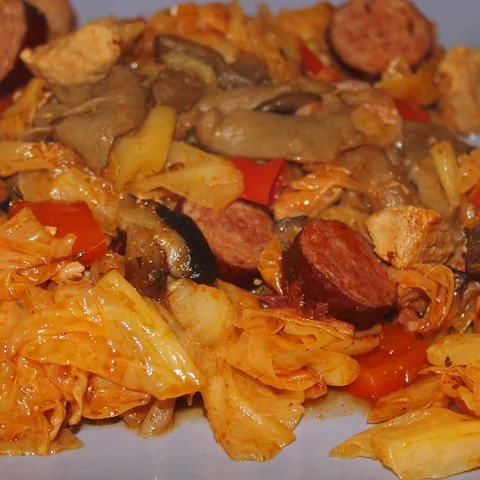
Stewed sauerkraut with pork
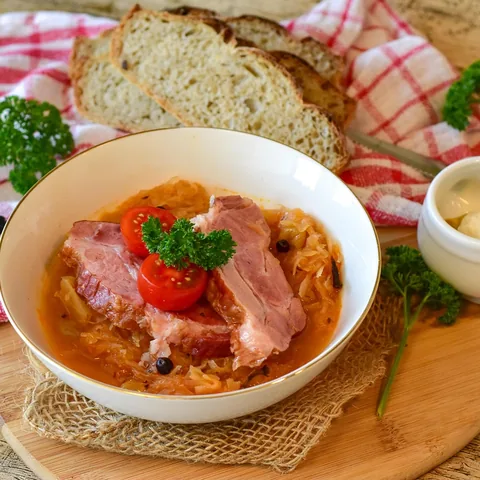
Tushanaya kapusta is sauerkraut braised slowly with pieces of pork, onion and carrot until it becomes soft, golden and gently tangy. The long cooking tames the sourness and lets the cabbage absorb the meat juices. It is served hot as a main course or as a side for boiled potatoes and sausages.
Diets
Allergens
None of the 14 major allergens in a typical recipe.
What it is made of
Recipe
Ingredients
- 1000 g sauerkraut
- 400 g pork shoulder
- 2 pcs onion
- 1 pcs carrot
- 1 tbsp tomato paste
- 2 tbsp sunflower oil
- 2 pcs bay leaves
- 1 tsp sugar
- salt and black pepper — to taste
Method
- Rinse the sauerkraut briefly if very sour and squeeze it.
- Brown the diced pork in oil in a heavy pot.
- Add the sliced onion and grated carrot and cook until soft.
- Add the sauerkraut, tomato paste, sugar, bay leaves and a cup of water.
- Cover and braise on low heat for about 1 hour, stirring now and then, until the cabbage is tender.
- Season and serve hot.
How to make it lighter
- Use lean pork tenderloin or turkey to cut the fat.
- Unrinsed sauerkraut keeps more probiotic-friendly acidity and vitamin C.
- Bulk it up with mushrooms instead of more meat.
History
Fermenting cabbage in barrels each autumn was essential in Belarusian households, giving a supply of vegetables for the whole winter. Braising it with meat was one of the most common ways to use it.
Count it in one photo
Point your camera at the table — Me Nutrition recognises Stewed sauerkraut with pork and every other dish, with calories and macros for each. Ate only half? Slide it.
Download on the App StoreSimilar dishes
Values are estimates per 100 g for a typical recipe; home and restaurant versions vary. Diets and allergens are worked out from the ingredients of a typical recipe — always check with whoever cooked the dish. Not medical advice. Nutrition data: Me Nutrition dish database v15. How we count →