
Bhuna gosht (dry-fried mutton curry)
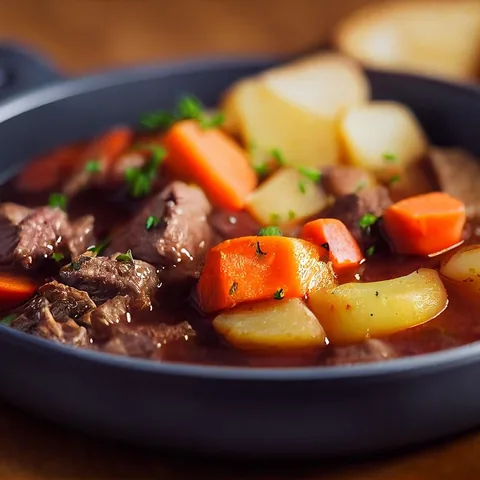
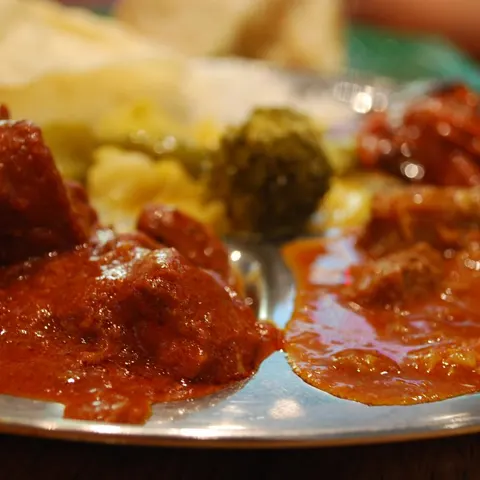
Bhuna gosht is a thick, nearly dry curry in which mutton is repeatedly stirred and fried with onion, tomato and spices until the gravy clings to the meat in a dark glossy coating. The flavour is concentrated, rich and deeply savoury. It is eaten with roti or naan and a salad of onion and lemon.
Diets
Allergens
None of the 14 major allergens in a typical recipe.
What it is made of
Recipe
Ingredients
- 600 g mutton, in pieces
- 3 onions (400 g), sliced
- 3 tomatoes (300 g)
- 40 g ginger-garlic paste
- 2 tsp coriander, 1 tsp cumin, 1 tsp chilli
- 1 tsp garam masala
- 80 ml oil, salt
Method
- Fry onions in oil until deep brown.
- Add the paste and spices and cook for 2 minutes.
- Add the meat and fry on high heat until browned.
- Add the tomatoes and a little water, cover and cook on low for 60 minutes.
- Uncover and stir-fry until the oil separates and the gravy is thick.
How to make it lighter
- Use less oil and lean cuts.
- Pair with roti and a large salad.
- Skim extra oil from the pan before serving.
History
The bhunna technique, frying spices and meat over high heat until the oil separates, is central to northern South Asian cooking. Bhuna gosht is a classic at Punjabi family meals and festive tables.
Count it in one photo
Point your camera at the table — Me Nutrition recognises Bhuna gosht (dry-fried mutton curry) and every other dish, with calories and macros for each. Ate only half? Slide it.
Download on the App StoreSimilar dishes

Values are estimates per 100 g for a typical recipe; home and restaurant versions vary. Diets and allergens are worked out from the ingredients of a typical recipe — always check with whoever cooked the dish. Not medical advice. Nutrition data: Me Nutrition dish database v15. How we count →