
Paya (Pakistani trotters stew)
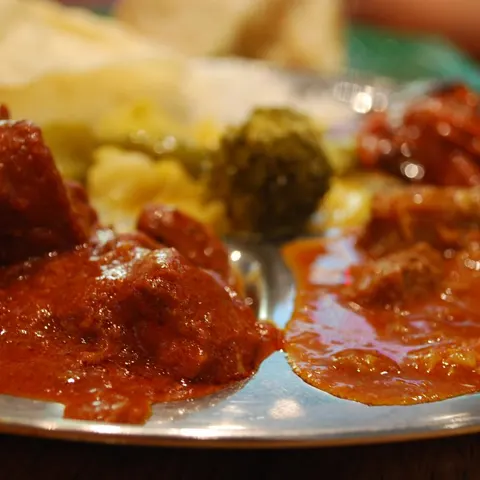
Paya is a silky, gelatinous stew made from goat, lamb or beef trotters that simmer for many hours until the meat falls off the bone. The broth is thick from collagen and fragrant with ginger, garlic, onion and warm spices. It is eaten hot, often for breakfast or on cold winter days, with naan or kulcha, lemon and fresh ginger strips.
Diets
Allergens
None of the 14 major allergens in a typical recipe.
What it is made of
Recipe
Ingredients
- 1 kg goat trotters, cleaned
- 2 onions (300 g), sliced
- 40 g ginger-garlic paste
- 2 tsp garam masala
- 1 tsp turmeric
- 1 tsp chilli powder
- 60 ml oil, salt, 2 l water
Method
- Blanch the cleaned trotters for 10 minutes and drain.
- Fry the onions in oil until golden, add ginger-garlic paste and spices.
- Add the trotters and fry for 5 minutes to coat them.
- Pour in the water, cover and simmer on low heat for 6-8 hours until very tender.
- Finish with fresh ginger, coriander and lemon; serve with naan.
How to make it lighter
- Skim the fat from the top of the broth before serving.
- Serve in small portions with plenty of lemon and fresh ginger.
- Keep the added oil to a minimum; the trotters already give richness.
History
Paya is a traditional dish across Punjab and Sindh and is often served at weekend breakfasts and during winter. Long simmering was a way to turn a cheap cut into a rich, nourishing meal.
Count it in one photo
Point your camera at the table — Me Nutrition recognises Paya (Pakistani trotters stew) and every other dish, with calories and macros for each. Ate only half? Slide it.
Download on the App StoreSimilar dishes
Values are estimates per 100 g for a typical recipe; home and restaurant versions vary. Diets and allergens are worked out from the ingredients of a typical recipe — always check with whoever cooked the dish. Not medical advice. Nutrition data: Me Nutrition dish database v15. How we count →