
Bindaetteok (mung bean pancake)
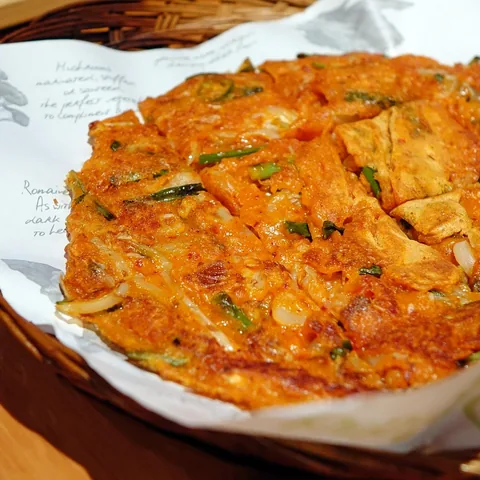
Bindaetteok is a thick pancake made from ground mung beans mixed with pork, kimchi and bean sprouts and fried until the edges are crisp. The center stays soft and nutty, with a savory-sour kick from the kimchi. It is a market and holiday favorite, often paired with a soy dipping sauce.
Diets
Allergens
Contains (in a typical recipe):
What it is made of
Recipe
Ingredients
- 200 g dried mung beans, soaked overnight
- 150 g ground pork
- 150 g kimchi, chopped
- 100 g bean sprouts
- 2 scallions (30 g)
- 5 tbsp oil (75 ml)
- 100 ml water
Method
- Grind the soaked mung beans with the water into a thick batter.
- Mix in pork, kimchi, sprouts and scallions with salt.
- Heat oil in a skillet over medium heat.
- Spoon batter into rounds about 10 cm wide.
- Fry 4 minutes per side until crisp and golden.
How to make it lighter
- Shallow-fry on a nonstick pan with less oil.
- Use lean pork or tofu.
- Serve with a vinegar-soy dip and a salad.
History
The pancake is associated with the Korean market stalls of Seoul and Pyongyang, and is also made for family holidays. Its simple base of ground beans reflects a long tradition of legumes in Korean cooking.
Count it in one photo
Point your camera at the table — Me Nutrition recognises Bindaetteok (mung bean pancake) and every other dish, with calories and macros for each. Ate only half? Slide it.
Download on the App StoreSimilar dishes
Values are estimates per 100 g for a typical recipe; home and restaurant versions vary. Diets and allergens are worked out from the ingredients of a typical recipe — always check with whoever cooked the dish. Not medical advice. Nutrition data: Me Nutrition dish database v15. How we count →