
Pão francês (Brazilian bread roll)
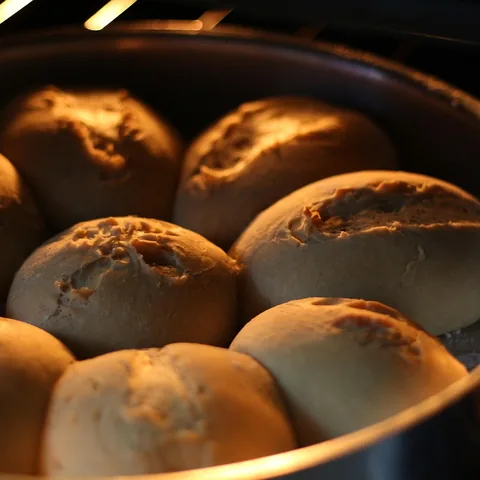
Pão francês is the everyday bread of Brazil: a small oval roll with a shiny, crackling crust and a light, cottony interior. Bakeries pull fresh batches out of the oven several times a day, and people buy them by the unit. The classic breakfast is a warm roll split and spread with butter, often pressed on a griddle, alongside milky coffee.
Diets
Allergens
Contains (in a typical recipe):
What it is made of
Recipe
Ingredients
- 500 g bread flour
- 10 g dried yeast
- 10 g salt
- 10 g sugar
- 15 ml vegetable oil
- 300 ml lukewarm water
Method
- Mix the flour, yeast and sugar, then add the water and oil.
- Add the salt and knead for about 10 minutes until smooth and elastic.
- Cover and leave to rise for 1 hour.
- Divide into 10 pieces, roll each into a tight oval and place on a tray.
- Rise for 45 minutes, then cut a single slash along the top.
- Bake at 220 °C with a tray of water in the oven for steam, 18 to 20 minutes, until deep golden.
- Cool on a rack so the crust stays crisp.
How to make it lighter
- Mix in 30% wholemeal flour for extra fibre.
- Top with a thin layer of ricotta instead of butter.
- Pair one roll with eggs or cheese to make a more balanced breakfast.
History
Despite the name, the roll is a Brazilian creation, reportedly inspired by the crusty bread that well-off Brazilians had eaten in Paris in the early twentieth century. Local bakers adapted it with a bit of sugar and fat, and it became the national daily bread.
Count it in one photo
Point your camera at the table — Me Nutrition recognises Pão francês (Brazilian bread roll) and every other dish, with calories and macros for each. Ate only half? Slide it.
Download on the App StoreSimilar dishes
Values are estimates per 100 g for a typical recipe; home and restaurant versions vary. Diets and allergens are worked out from the ingredients of a typical recipe — always check with whoever cooked the dish. Not medical advice. Nutrition data: Me Nutrition dish database v15. How we count →