
Caldo de feijão (Brazilian black bean soup)
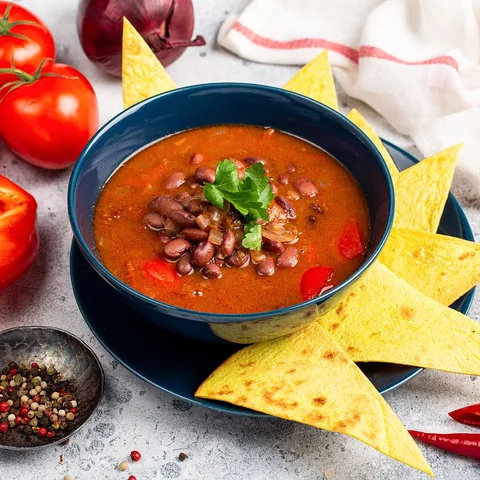
Caldo de feijão is a thick, velvety soup made by blending cooked beans with their broth and simmering them with fried bacon, sausage, onion and garlic. It is served in small cups or bowls, scattered with spring onion and sometimes a few drops of hot pepper sauce. In Brazil it is a winter favourite and a classic late-night snack at bars and parties.
Diets
Allergens
None of the 14 major allergens in a typical recipe.
What it is made of
Recipe
Ingredients
- 400 g dried black beans, soaked overnight
- 100 g bacon, diced
- 150 g smoked sausage, diced
- 1 onion, chopped
- 3 garlic cloves, crushed
- 1.5 litres water
- 2 bay leaves
- 2 spring onions, sliced
- Salt and pepper
Method
- Cook the soaked beans with the bay leaves in the water for about 1 hour until very soft.
- Remove the bay leaves and blend the beans with their liquid until smooth.
- Fry the bacon and sausage in a pot until browned.
- Add the onion and garlic and cook for 3 minutes.
- Pour in the blended beans and simmer for 15 minutes, adding water if too thick.
- Season and serve hot with spring onion on top.
How to make it lighter
- Use only a little bacon for flavour and drop the sausage.
- Add diced carrot or pumpkin to the beans for more vegetables.
- A vegetarian version with smoked paprika is just as satisfying.
History
Beans are eaten almost daily in Brazil, and turning leftover beans into a blended broth is an old household habit. Small cups of caldo became a fixture of bar menus and the June festivals held across the country.
Count it in one photo
Point your camera at the table — Me Nutrition recognises Caldo de feijão (Brazilian black bean soup) and every other dish, with calories and macros for each. Ate only half? Slide it.
Download on the App StoreSimilar dishes
Values are estimates per 100 g for a typical recipe; home and restaurant versions vary. Diets and allergens are worked out from the ingredients of a typical recipe — always check with whoever cooked the dish. Not medical advice. Nutrition data: Me Nutrition dish database v15. How we count →