
Chungmu gimbap (plain rice rolls with spicy squid)
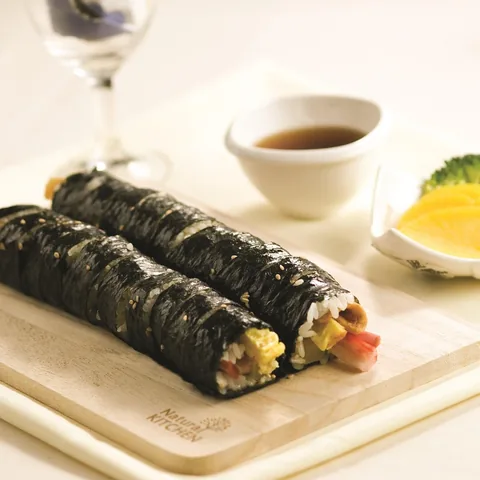
Chungmu gimbap is a slim roll of plain, unseasoned rice wrapped in dried seaweed with no filling inside. It is served with spicy stir-fried squid and a tangy, chili-red radish kimchi to be eaten alongside. Each bite is picked up with a toothpick and combines mild rice with hot, chewy squid and crunchy radish.
Diets
Allergens
Contains (in a typical recipe):
What it is made of
Recipe
Ingredients
- 2 cups cooked rice (400 g)
- 4 sheets seaweed (nori)
- 200 g squid, cleaned and sliced
- 200 g radish, cut in cubes
- 2 tbsp gochugaru (14 g)
- garlic, sugar, salt, 1 tbsp sesame oil
Method
- Cut the nori in strips and roll small amounts of plain rice tightly in each.
- Sprinkle the radish with salt for 20 minutes and drain.
- Mix the radish with gochugaru, garlic and sugar to make the kimchi.
- Blanch the squid, then stir-fry it with the same seasoning until glossy.
- Serve the rolls with squid and radish kimchi on the side.
How to make it lighter
- Use brown rice for more fibre.
- Keep the squid sauce light on sugar and salt.
- Add a vegetable side to balance the meal.
History
The dish comes from the port city of Tongyeong, where it is said that rolls were made without filling because fillings spoiled quickly in the heat for fishermen carrying their meals. It is now a well-known local specialty.
Count it in one photo
Point your camera at the table — Me Nutrition recognises Chungmu gimbap (plain rice rolls with spicy squid) and every other dish, with calories and macros for each. Ate only half? Slide it.
Download on the App StoreSimilar dishes
Values are estimates per 100 g for a typical recipe; home and restaurant versions vary. Diets and allergens are worked out from the ingredients of a typical recipe — always check with whoever cooked the dish. Not medical advice. Nutrition data: Me Nutrition dish database v15. How we count →