
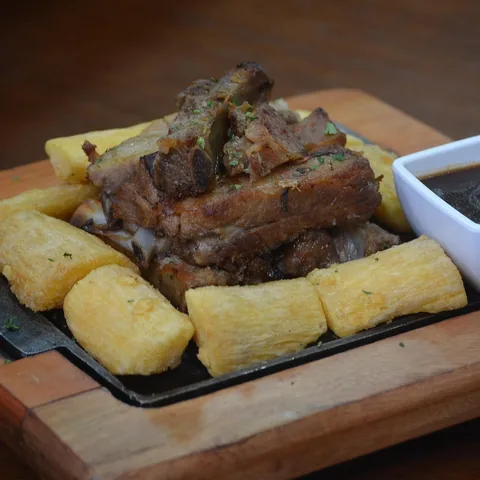
Costela de pacu (fried pacu ribs)
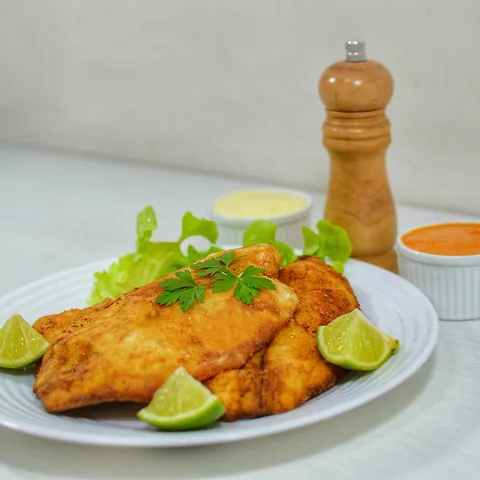
Costela de pacu is the rib section of pacu, a round, fatty freshwater fish from the Pantanal and the rivers of Mato Grosso. The ribs are marinated in lime, garlic and salt, dusted lightly and fried until the outside is crisp and the meat stays juicy, or grilled over charcoal. Eaten with fingers, they are a favourite bar snack with lime wedges. As a meal they come with rice, pirão and vinaigrette salsa.
Diets
Allergens
Contains (in a typical recipe):
What it is made of
Recipe
Ingredients
- 1 kg pacu ribs
- 3 limes
- 4 garlic cloves
- 100 g cassava flour or cornmeal for dusting
- Salt
- Oil for frying
Method
- Rinse the ribs and pat dry.
- Marinate with crushed garlic, lime juice and salt for 30 minutes.
- Dust the ribs lightly with cassava flour.
- Heat oil to 175 °C.
- Fry in batches 6–8 minutes until golden and crisp.
- Drain on paper.
- Serve hot with lime wedges.
How to make it lighter
- Grill the ribs instead of frying; pacu has plenty of its own fat.
- Use an air fryer with a light spray of oil.
- Serve with salad rather than fries.
History
Pacu is one of the best-known fish of the Pantanal and is today widely farmed in Mato Grosso. Fried pacu ribs are a common item in Cuiabá restaurants and fish shacks along the rivers.
Count it in one photo
Point your camera at the table — Me Nutrition recognises Costela de pacu (fried pacu ribs) and every other dish, with calories and macros for each. Ate only half? Slide it.
Download on the App StoreSimilar dishes
Values are estimates per 100 g for a typical recipe; home and restaurant versions vary. Diets and allergens are worked out from the ingredients of a typical recipe — always check with whoever cooked the dish. Not medical advice. Nutrition data: Me Nutrition dish database v15. How we count →