
Dwaeji bulgogi (spicy grilled pork)
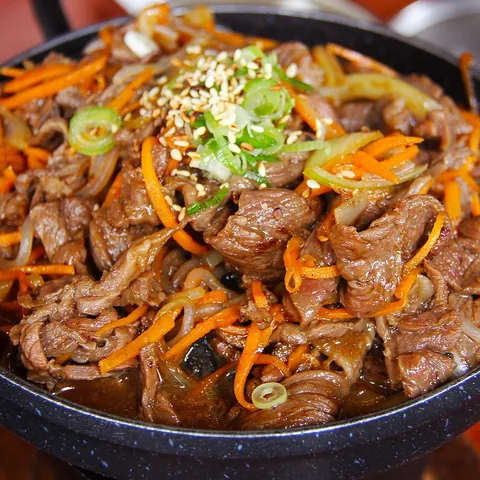
Dwaeji bulgogi is thinly sliced pork marinated in a red paste of gochujang, garlic, ginger and sesame oil, then grilled until sticky and slightly charred. It is spicy, sweet and savory, and is eaten wrapped in lettuce leaves with rice and ssamjang. The onions soften and sweeten in the pan juices.
Diets
Allergens
Contains (in a typical recipe):
What it is made of
Recipe
Ingredients
- 600 g pork shoulder, thinly sliced
- 3 tbsp gochujang (60 g)
- 1 onion (150 g)
- 4 garlic cloves (15 g)
- 1 tbsp sesame oil (15 ml)
- 1 tbsp soy sauce (15 ml)
- 1 tbsp sugar, ginger, lettuce to serve
Method
- Mix gochujang, soy sauce, sugar, grated garlic, ginger and sesame oil.
- Toss the pork in the marinade and rest 30 minutes.
- Slice the onion and heat a pan or grill over high heat.
- Cook the pork with the onion 8-10 minutes until caramelized.
- Serve in lettuce leaves with rice.
How to make it lighter
- Choose a leaner cut such as pork loin to reduce fat.
- Add more vegetables to the pan.
- Cut the sugar and soy to lower sugar and sodium.
History
Bulgogi originally refers to marinated grilled beef, and the pork version using chili paste became widespread as a more affordable, spicier everyday option. It is common at home tables and restaurants.
Count it in one photo
Point your camera at the table — Me Nutrition recognises Dwaeji bulgogi (spicy grilled pork) and every other dish, with calories and macros for each. Ate only half? Slide it.
Download on the App StoreSimilar dishes
Values are estimates per 100 g for a typical recipe; home and restaurant versions vary. Diets and allergens are worked out from the ingredients of a typical recipe — always check with whoever cooked the dish. Not medical advice. Nutrition data: Me Nutrition dish database v15. How we count →