
Hornado (Ecuadorian roast pork)
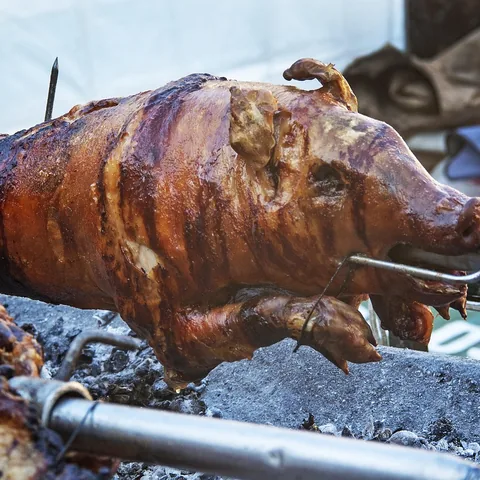
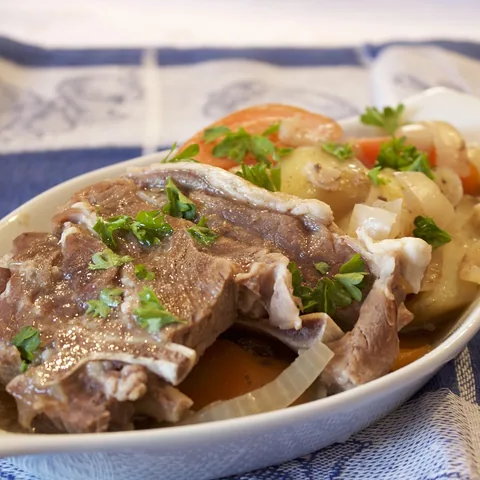
Hornado is pork, often a whole leg or even a whole pig, rubbed with garlic, cumin, achiote and bitter orange or beer marinade and roasted for hours in a wood oven. The meat is juicy and soft with crackling skin. Plates are built with llapingachos, mote (boiled hominy), avocado, pickled onion salad and a splash of the tangy roasting juices called agrio.
Diets
Allergens
None of the 14 major allergens in a typical recipe.
What it is made of
Recipe
Ingredients
- 1 pork leg, about 4 kg
- 1 head garlic, crushed
- 2 tbsp ground cumin
- 1 tbsp achiote paste
- 300 ml bitter orange juice
- 500 g cooked mote (hominy)
- llapingachos and avocado to serve
- salt, pepper
Method
- Score the skin and make deep cuts in the meat.
- Blend garlic, cumin, achiote, salt and orange juice and rub it all over; marinate overnight.
- Roast at 160 °C for about 4-5 hours, basting with the juices.
- Raise the heat at the end to crisp the skin.
- Mix the pan juices with a little orange juice and onion to make the agrio.
- Slice and serve with llapingachos, mote, avocado and agrio.
How to make it lighter
- Eat the lean meat and leave most of the crackling.
- Fill half the plate with salad and avocado instead of extra potatoes.
- Skim the fat from the juices before making the agrio.
History
Pigs arrived with the Spanish, and slow roasting in clay or brick ovens became a highland tradition. Markets in towns like Sangolquí and Riobamba are famous for their hornado stalls. It is a typical dish for celebrations and weekend family meals.
Count it in one photo
Point your camera at the table — Me Nutrition recognises Hornado (Ecuadorian roast pork) and every other dish, with calories and macros for each. Ate only half? Slide it.
Download on the App StoreSimilar dishes
Values are estimates per 100 g for a typical recipe; home and restaurant versions vary. Diets and allergens are worked out from the ingredients of a typical recipe — always check with whoever cooked the dish. Not medical advice. Nutrition data: Me Nutrition dish database v15. How we count →