
Escabeche de pescado (Peruvian fish in vinegar-onion sauce)
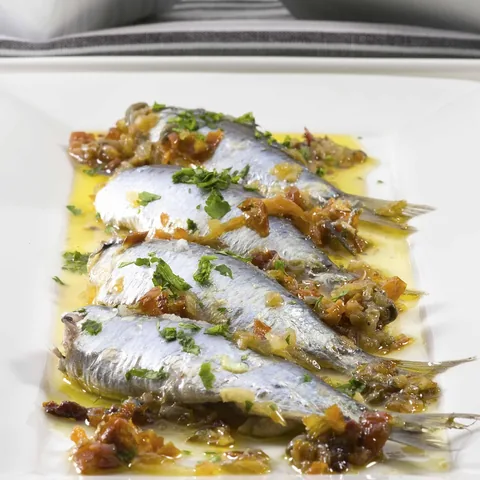
Escabeche de pescado is fried fish covered with a generous layer of thick-cut red onion softened in vinegar, ají amarillo, ají panca, garlic and cumin. The sauce is tangy and aromatic, and the dish is garnished with boiled egg, black olives, fresh cheese and slices of sweet potato. It is often eaten at room temperature, especially during Lent.
Diets
Allergens
Contains (in a typical recipe):
What it is made of
Recipe
Ingredients
- 4 fillets of firm white fish, 150 g each
- Flour for dusting
- 3 red onions, in thick strips
- 150 ml red wine vinegar
- 2 tbsp ají amarillo paste
- 1 tbsp ají panca paste
- 3 garlic cloves
- 1/2 tsp cumin
- 2 boiled eggs
- 1 boiled sweet potato, sliced
- Black olives
- 3 tbsp oil
Method
- Season the fish, dust lightly with flour and pan-fry until golden; set aside.
- In the same pan cook garlic, ají amarillo, ají panca and cumin.
- Add the onion and cook just until it softens slightly.
- Pour in the vinegar with a splash of water and simmer for 3 minutes.
- Spoon the onion sauce over the fish and let it rest for at least 15 minutes.
- Garnish with egg, olives and sweet potato and serve warm or at room temperature.
How to make it lighter
- Bake or grill the fish instead of frying.
- Skip the flour coating for a gluten-free plate.
- Serve with a green salad instead of extra starch.
History
Escabeche is a Spanish technique of preserving fish or meat in vinegar that came to Peru in colonial times. Peruvian cooks added local chillies and garnishes, making it a classic of Lima’s criollo cooking.
Count it in one photo
Point your camera at the table — Me Nutrition recognises Escabeche de pescado (Peruvian fish in vinegar-onion sauce) and every other dish, with calories and macros for each. Ate only half? Slide it.
Download on the App StoreSimilar dishes
Values are estimates per 100 g for a typical recipe; home and restaurant versions vary. Diets and allergens are worked out from the ingredients of a typical recipe — always check with whoever cooked the dish. Not medical advice. Nutrition data: Me Nutrition dish database v15. How we count →