
Kababi (Georgian minced kebab)
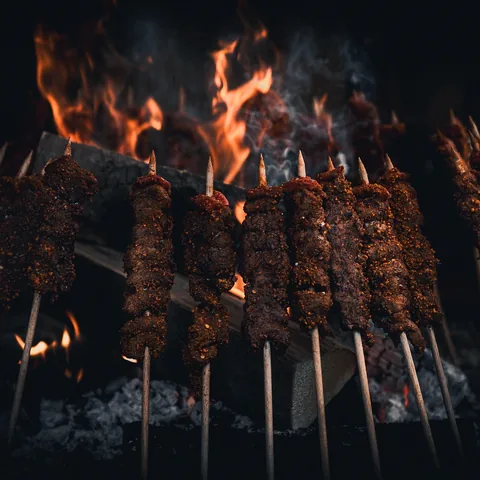
Georgian kababi is seasoned minced lamb or beef pressed around flat skewers and grilled over vine or wood embers until smoky and juicy. It is usually served wrapped in thin lavash with raw onion sprinkled with sumac, fresh herbs and sometimes a tomato or tkemali sauce. It is a popular street and roadside food, eaten hot straight from the grill.
Diets
Allergens
Contains (in a typical recipe):
What it is made of
Recipe
Ingredients
- 800 g minced lamb
- 2 onions (200 g)
- 1 tsp ground coriander
- salt and black pepper
- 4 sheets of lavash (240 g)
- 1 red onion with sumac
- a bunch of cilantro and parsley
Method
- Mince the lamb with onion and drain off any liquid.
- Season with salt, pepper and coriander and knead for several minutes until the mixture is sticky.
- Chill for 20 minutes, then press the meat onto flat skewers in long shapes.
- Grill over hot embers for 8–10 minutes, turning often.
- Slide off onto lavash, add sliced onion with sumac and herbs, and roll up.
How to make it lighter
- Mix in lean beef to reduce the fat of fatty lamb.
- Fill the lavash with extra herbs, tomato and cucumber.
- Skip the sauce or use a yogurt one instead of mayonnaise-based ones.
History
Minced-meat kebabs are shared by the whole region from Turkey to Iran, and Georgia's version is close to its Armenian and Azerbaijani neighbours. Grilling over vine cuttings is a typical Georgian touch.
Count it in one photo
Point your camera at the table — Me Nutrition recognises Kababi (Georgian minced kebab) and every other dish, with calories and macros for each. Ate only half? Slide it.
Download on the App StoreSimilar dishes
Values are estimates per 100 g for a typical recipe; home and restaurant versions vary. Diets and allergens are worked out from the ingredients of a typical recipe — always check with whoever cooked the dish. Not medical advice. Nutrition data: Me Nutrition dish database v15. How we count →