
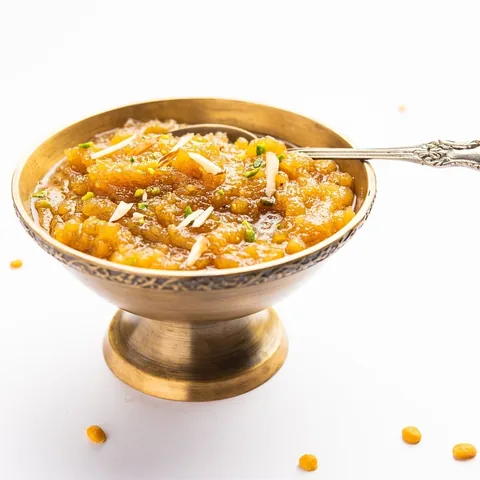
Ghevar (Rajasthani honeycomb sweet)
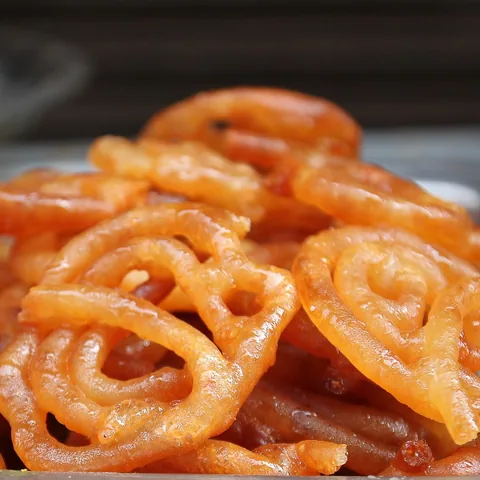
Ghevar is a disc-shaped sweet with a lacy, honeycomb texture, made by pouring thin batter into hot ghee in a thin stream. The crisp disc is soaked in sugar syrup and topped with thickened sweet milk, saffron and pistachios. The taste is very sweet, buttery and fragrant, with a crunch that softens as it absorbs syrup. It is especially eaten at the Teej festival and during the monsoon.
Diets
Allergens
Contains (in a typical recipe):
What it is made of
Recipe
Ingredients
- 200 g plain flour
- 150 g ghee for the batter and frying
- 250 ml cold milk, 250 ml iced water
- 200 g sugar for syrup
- 100 ml thickened sweet milk (rabri)
- saffron, pistachios, cardamom
Method
- Whisk the flour with 50 g ghee and cold milk into a thin lump-free batter; add iced water to reach a runny consistency.
- Make syrup with the sugar, water, cardamom and saffron.
- Heat the remaining ghee in a deep pan and pour the batter slowly in a thin stream in the centre; it will form a honeycomb.
- Fry until golden and crisp, then lift out and drain.
- Dip briefly in warm syrup, top with rabri and pistachios, and serve.
How to make it lighter
- Serve a small slice rather than a full disc.
- Skip the rabri to reduce fat and sugar.
- Dip in syrup only briefly.
History
Ghevar is strongly associated with Jaipur and with the Teej and Raksha Bandhan festivals in Rajasthan. Its lattice shape forms naturally as the batter sizzles in hot ghee.
Count it in one photo
Point your camera at the table — Me Nutrition recognises Ghevar (Rajasthani honeycomb sweet) and every other dish, with calories and macros for each. Ate only half? Slide it.
Download on the App StoreSimilar dishes
Values are estimates per 100 g for a typical recipe; home and restaurant versions vary. Diets and allergens are worked out from the ingredients of a typical recipe — always check with whoever cooked the dish. Not medical advice. Nutrition data: Me Nutrition dish database v15. How we count →