
Goiabada (Brazilian guava paste)
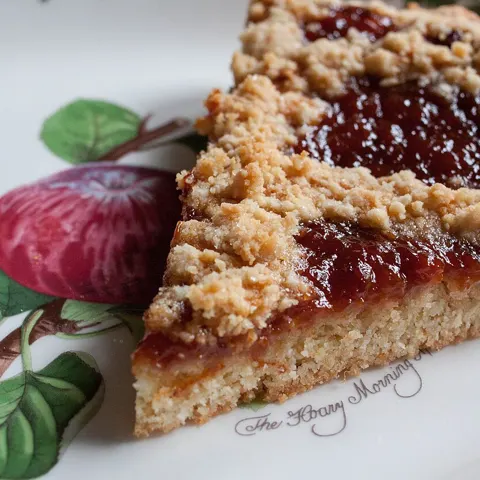
Goiabada is a deep red, firm fruit paste made by cooking guava pulp with sugar until it thickens enough to set into a block. It is sliced and eaten on its own, with cheese, on toast or as a filling for pastries and cakes. A softer, spoonable version called goiabada cascão keeps small pieces of fruit and peel.
Diets
Allergens
None of the 14 major allergens in a typical recipe.
What it is made of
Recipe
Ingredients
- 1 kg ripe red guavas
- 500 g sugar
- Juice of 1/2 lemon
- 200 ml water
Method
- Wash the guavas, cut them in quarters and scoop out the seeds.
- Cook the guavas with the water until soft, then blend to a purée.
- Return to a heavy pot with the sugar and lemon juice.
- Cook over low heat, stirring often, for 45 to 60 minutes.
- Stop when the paste pulls away from the pot and shows the base when stirred.
- Pour into a lined tin, smooth the top and leave to set for several hours before slicing.
How to make it lighter
- Reduce the sugar to 350 g and store the paste in the fridge.
- Eat thin slices with fresh cheese for protein.
- Keep portions to about 30 g since it is almost pure sugar.
History
Fruit pastes came to Brazil from the Portuguese tradition of marmelada, made with quince. Since quince did not thrive in the tropics, cooks used native guava instead, and goiabada became one of Brazil's most typical sweets.
Count it in one photo
Point your camera at the table — Me Nutrition recognises Goiabada (Brazilian guava paste) and every other dish, with calories and macros for each. Ate only half? Slide it.
Download on the App StoreSimilar dishes
Values are estimates per 100 g for a typical recipe; home and restaurant versions vary. Diets and allergens are worked out from the ingredients of a typical recipe — always check with whoever cooked the dish. Not medical advice. Nutrition data: Me Nutrition dish database v15. How we count →