
Paçoca (Brazilian peanut candy)
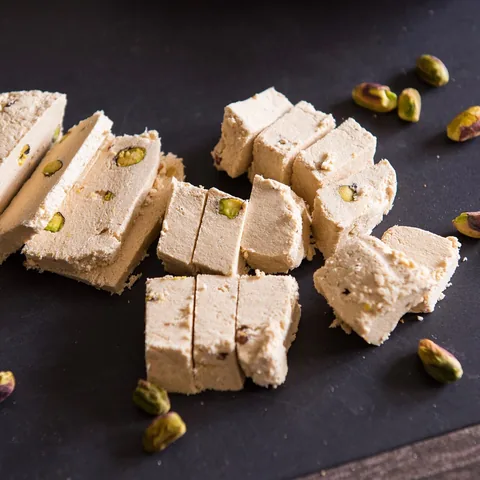
Paçoca is a sweet made by grinding roasted peanuts with sugar and a little cassava flour, then pressing the mixture into small blocks or rounds. It melts and crumbles in the mouth, tasting like a sweet, salty peanut butter fudge. Brazilians buy it wrapped in small squares and eat it as a snack, especially at June festivals.
Diets
Allergens
Contains (in a typical recipe):
What it is made of
Recipe
Ingredients
- 300 g roasted unsalted peanuts
- 150 g sugar
- 100 g cassava flour (or fine breadcrumbs)
- 1 pinch salt
Method
- Rub the skins off the roasted peanuts.
- Grind the peanuts in a food processor until a coarse, slightly oily meal forms.
- Add sugar, cassava flour and salt and pulse until it holds together when squeezed.
- Press firmly into a lined tray or small round moulds.
- Leave for 30 minutes to set, then cut into squares.
How to make it lighter
- One small square is enough; peanuts and sugar make it very dense in calories.
- Use less sugar and add a pinch of cinnamon to keep the flavour.
- It is naturally vegan and a good source of plant protein and fibre.
History
The name comes from a Tupi word for something crushed or pounded, and an older savoury paçoca of pounded meat and cassava flour still exists. The sweet peanut version became a mass-market candy in the 20th century and is a fixture of Festa Junina.
Count it in one photo
Point your camera at the table — Me Nutrition recognises Paçoca (Brazilian peanut candy) and every other dish, with calories and macros for each. Ate only half? Slide it.
Download on the App StoreSimilar dishes
Values are estimates per 100 g for a typical recipe; home and restaurant versions vary. Diets and allergens are worked out from the ingredients of a typical recipe — always check with whoever cooked the dish. Not medical advice. Nutrition data: Me Nutrition dish database v15. How we count →