
Beshbarmak (boiled meat with noodle sheets)
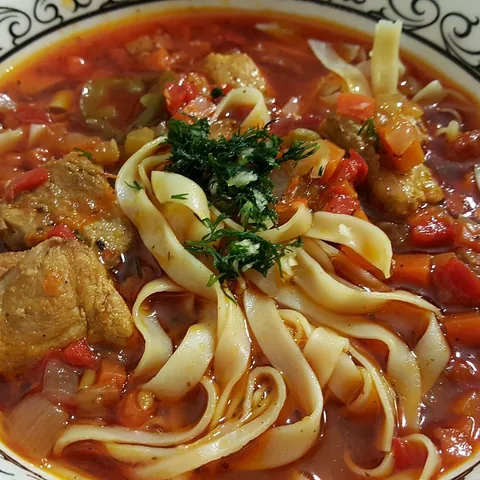
Beshbarmak is the dish Kazakh families serve to honoured guests. Lamb, beef or horse meat, often with kazy, is boiled for hours, then sliced and laid over large squares of thin noodle dough cooked in the same broth. Onion softened in hot broth and pepper goes on top, and a bowl of the broth, sorpa, is drunk alongside.
Diets
Allergens
Contains (in a typical recipe):
What it is made of
Recipe
Ingredients
- 1.5 kg lamb or horse meat on the bone
- 300 g flour
- 1 egg
- 120 ml water
- 3 onions (400 g)
- 2 bay leaves
- salt, black pepper
Method
- Cover the meat with cold water, bring to a boil and skim.
- Add bay leaves and salt and simmer gently for 2.5–3 hours.
- Meanwhile knead flour, egg, water and salt into a firm dough and rest it 30 minutes.
- Roll the dough very thin and cut into 8–10 cm squares.
- Slice the onions into rings and pour over a ladle of hot fat-rich broth with pepper.
- Boil the dough squares in some of the broth for 3–4 minutes.
- Lay the noodles on a platter, top with sliced meat and the onion; serve broth in bowls.
How to make it lighter
- Skim the fat from the broth before cooking the noodles.
- Choose leaner cuts and serve smaller meat portions.
- Add a fresh salad on the side to balance the meal.
History
The name means "five fingers", because the dish was traditionally eaten by hand. It is central to Kazakh hospitality, and at feasts the different cuts of meat, including the sheep's head, are shared out according to custom and the age of guests.
Count it in one photo
Point your camera at the table — Me Nutrition recognises Beshbarmak (boiled meat with noodle sheets) and every other dish, with calories and macros for each. Ate only half? Slide it.
Download on the App StoreSimilar dishes
Values are estimates per 100 g for a typical recipe; home and restaurant versions vary. Diets and allergens are worked out from the ingredients of a typical recipe — always check with whoever cooked the dish. Not medical advice. Nutrition data: Me Nutrition dish database v15. How we count →