
Kazakh manti (steamed dumplings)
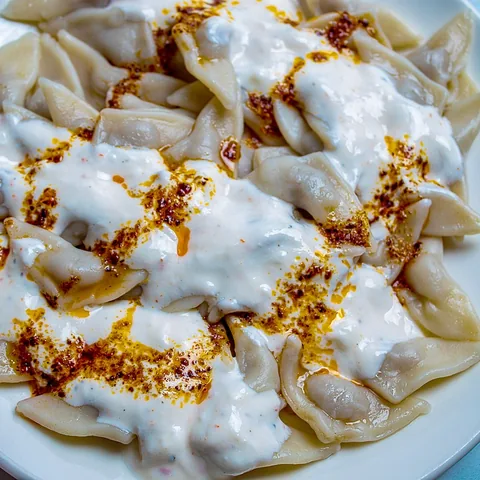
Kazakh manti are large, hand-pleated dumplings of thin dough filled with knife-chopped meat, lots of onion and, very often, cubes of pumpkin. They are cooked on oiled tiers of a steamer called a mantyshnitsa until the filling turns juicy and the dough translucent. They are eaten by hand or with a fork, with sour cream, katyk or a spoon of chilli sauce.
Diets
Allergens
Contains (in a typical recipe):
What it is made of
Recipe
Ingredients
- 500 g flour
- 250 ml water
- 1 tsp salt
- 500 g lamb or beef, finely chopped
- 300 g pumpkin, finely diced
- 3 onions (350 g), chopped
- 50 g lamb tail fat or butter
- salt, black pepper, cumin
Method
- Knead flour, water and salt into a smooth dough and rest it 30 minutes.
- Mix the meat, pumpkin, onion, fat and spices into a filling.
- Roll the dough thin and cut into 10–12 cm squares.
- Place a spoonful of filling in the centre and pinch the corners together into a closed parcel.
- Arrange on oiled steamer trays and steam for 40–45 minutes.
- Serve hot with sour cream or katyk.
How to make it lighter
- Use more pumpkin and less meat for a lighter filling.
- Skip the tail fat and use lean meat with a little onion juice for moisture.
- Serve with yogurt instead of sour cream.
History
Steamed manti are shared by many peoples of Central Asia, and the Kazakh kitchen adopted them from neighbouring Uyghur and Uzbek cooks. Pumpkin is a popular addition in autumn and winter, making the filling sweeter and lighter.
Count it in one photo
Point your camera at the table — Me Nutrition recognises Kazakh manti (steamed dumplings) and every other dish, with calories and macros for each. Ate only half? Slide it.
Download on the App StoreSimilar dishes

Values are estimates per 100 g for a typical recipe; home and restaurant versions vary. Diets and allergens are worked out from the ingredients of a typical recipe — always check with whoever cooked the dish. Not medical advice. Nutrition data: Me Nutrition dish database v15. How we count →