
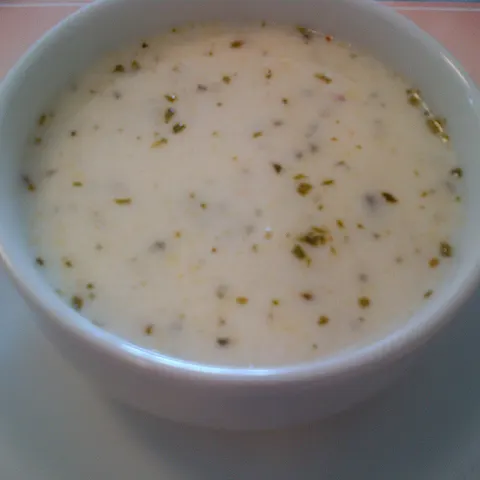
Sorpa (Kazakh meat broth)
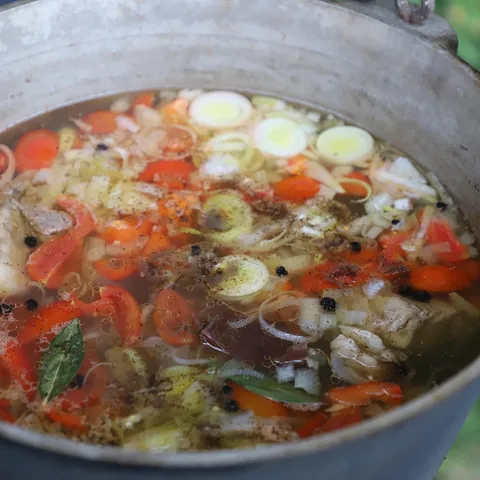
Sorpa is the clear, golden broth that remains after lamb or horse meat has been boiled for beshbarmak. It is seasoned simply with salt, pepper and onion, and sometimes with a little kurt dissolved in it. Served hot in bowls at the end of the meal, it is meaty, warming and thought to help digest a heavy feast.
Diets
Allergens
None of the 14 major allergens in a typical recipe.
What it is made of
Recipe
Ingredients
- 1.5 kg lamb or horse meat on the bone
- 3 l water
- 1 onion (120 g)
- 2 bay leaves
- salt, black pepper
- optional: 1 piece of kurt
Method
- Put the meat in cold water and bring slowly to a boil.
- Skim the foam carefully to keep the broth clear.
- Add the whole onion and bay leaves and simmer gently for 2.5–3 hours.
- Season with salt near the end.
- Lift out the meat for beshbarmak and strain the broth.
- Serve hot in bowls with black pepper and chopped onion or dissolved kurt.
How to make it lighter
- Chill the broth and lift off the fat before reheating.
- Add vegetables to turn it into a light soup.
- Season with herbs rather than extra salt.
History
In Kazakh tradition sorpa is never thrown away; drinking it after beshbarmak is part of the ritual of a meal with guests. It is also given to people who are tired or unwell as a restoring food.
Count it in one photo
Point your camera at the table — Me Nutrition recognises Sorpa (Kazakh meat broth) and every other dish, with calories and macros for each. Ate only half? Slide it.
Download on the App StoreSimilar dishes
Values are estimates per 100 g for a typical recipe; home and restaurant versions vary. Diets and allergens are worked out from the ingredients of a typical recipe — always check with whoever cooked the dish. Not medical advice. Nutrition data: Me Nutrition dish database v15. How we count →