
Karta (boiled horse intestine)
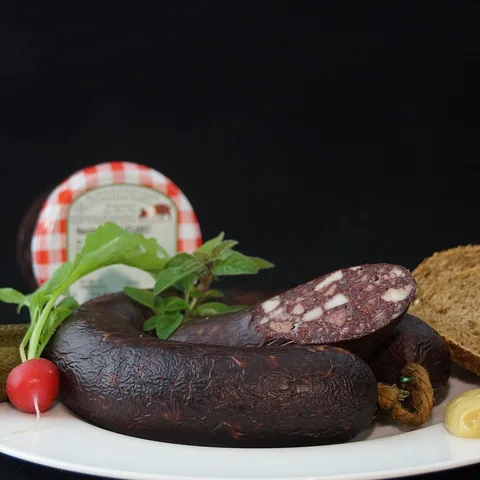
Karta is a section of horse large intestine, carefully cleaned and turned so that its layer of fat sits inside. It is salted, sometimes dried or lightly smoked, and then boiled until tender. Cut into rings, it is soft and rich with a mild, slightly sweet flavour, and it is served in small pieces on a meat platter.
Diets
Allergens
None of the 14 major allergens in a typical recipe.
What it is made of
Recipe
Ingredients
- 1 kg horse large intestine with fat
- 20 g salt
- 1 tsp black pepper
- 2 bay leaves
Method
- Rinse the intestine thoroughly in several changes of cold water.
- Turn it so the fat layer is on the inside, rinsing again carefully.
- Rub with salt and pepper and tie the ends.
- Leave in the cold for a few hours, or dry for a day if you prefer.
- Simmer in water with bay leaves for 1.5–2 hours until tender.
- Cool slightly and slice into rings to serve with other meats.
How to make it lighter
- Serve only a few rings as part of a mixed platter.
- Balance it with plenty of fresh vegetables and herbs.
- Keep it for festive meals because of its high fat content.
History
Karta belongs to the group of horse-meat delicacies, together with kazy, shuzhuk and zhaya, that come from the winter slaughter. Because it is laborious to clean and prepare, it is reserved for festive tables and honoured guests.
Count it in one photo
Point your camera at the table — Me Nutrition recognises Karta (boiled horse intestine) and every other dish, with calories and macros for each. Ate only half? Slide it.
Download on the App StoreSimilar dishes
Values are estimates per 100 g for a typical recipe; home and restaurant versions vary. Diets and allergens are worked out from the ingredients of a typical recipe — always check with whoever cooked the dish. Not medical advice. Nutrition data: Me Nutrition dish database v15. How we count →