
Zhaya (salted smoked horse hip)
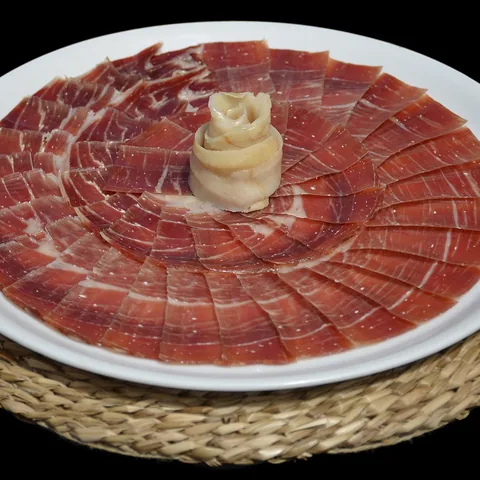
Zhaya is cut from the hip of a horse, a thick piece of meat with a layer of fat on top. It is rubbed with salt, pepper and garlic, left to cure, then dried and smoked. Boiled and cooled, it is sliced thin and served on the meat platter, where it tastes smoky, salty and deeply meaty.
Diets
Allergens
None of the 14 major allergens in a typical recipe.
What it is made of
Recipe
Ingredients
- 1.5 kg horse hip with fat layer
- 40 g salt
- 4 garlic cloves (20 g)
- 1 tsp black pepper
Method
- Trim the meat into an even block, keeping the fat layer.
- Rub all over with salt, crushed garlic and pepper.
- Leave to cure in the cold for 2–3 days, turning daily.
- Dry in an airy place for a day, then cold-smoke for several hours.
- Simmer the zhaya in water for about 2 hours.
- Cool completely and slice thinly across the grain.
How to make it lighter
- Trim some of the fat layer before eating.
- Soak briefly before boiling to reduce the salt.
- Serve thin slices with fresh vegetables rather than bread alone.
History
Zhaya is one of the classic horse-meat preserves of the Kazakh winter slaughter, alongside kazy and karta. Curing and smoking let herders keep meat through the cold months, and today it is a favourite festive cold cut.
Count it in one photo
Point your camera at the table — Me Nutrition recognises Zhaya (salted smoked horse hip) and every other dish, with calories and macros for each. Ate only half? Slide it.
Download on the App StoreSimilar dishes
Values are estimates per 100 g for a typical recipe; home and restaurant versions vary. Diets and allergens are worked out from the ingredients of a typical recipe — always check with whoever cooked the dish. Not medical advice. Nutrition data: Me Nutrition dish database v15. How we count →