
Nauryz kozhe (spring holiday soup)
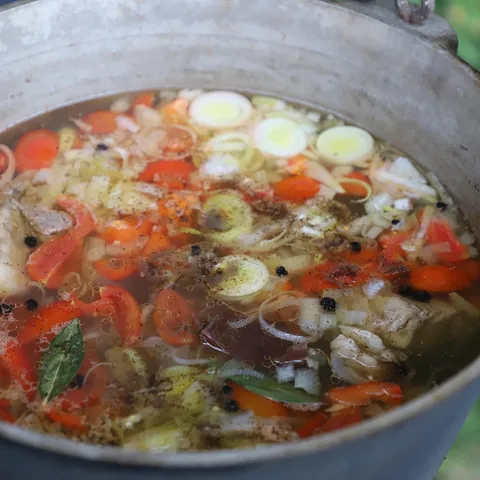
Nauryz kozhe is made once a year for Nauryz, the spring new year celebrated around the March equinox. It must contain seven ingredients, usually water, meat, salt, several grains such as wheat, rice and millet, and milk or katyk. The result is a thick, mildly sour porridge-like soup that families share with neighbours and guests.
Diets
Allergens
Contains (in a typical recipe):
What it is made of
Recipe
Ingredients
- 300 g beef or smoked horse meat
- 2.5 l water
- 60 g wheat grain, soaked
- 60 g rice
- 60 g millet
- 500 ml milk
- 300 g katyk or yogurt
- salt
Method
- Simmer the meat in the water for 1 hour, then lift it out and dice it.
- Add the soaked wheat to the broth and cook 30 minutes.
- Add the rice and millet and simmer 20 minutes more, stirring now and then.
- Return the meat to the pot and pour in the milk; bring back to a simmer.
- Take the pot off the heat, cool slightly and stir in the katyk.
- Season with salt and serve warm or cool in bowls.
How to make it lighter
- Use lean beef instead of fatty smoked meat.
- Choose semi-skimmed milk and low-fat yogurt.
- Add more grains and less meat for a fibre-rich bowl.
History
The number seven symbolises good fortune and the seven days of the week, and the soup expresses wishes for abundance in the new year. Preserved meat kept from the winter, such as kazy or zhaya, is traditionally added, linking the old season with the new.
Count it in one photo
Point your camera at the table — Me Nutrition recognises Nauryz kozhe (spring holiday soup) and every other dish, with calories and macros for each. Ate only half? Slide it.
Download on the App StoreSimilar dishes

Values are estimates per 100 g for a typical recipe; home and restaurant versions vary. Diets and allergens are worked out from the ingredients of a typical recipe — always check with whoever cooked the dish. Not medical advice. Nutrition data: Me Nutrition dish database v15. How we count →