
Kerak telor (Jakarta spiced egg and rice omelette)
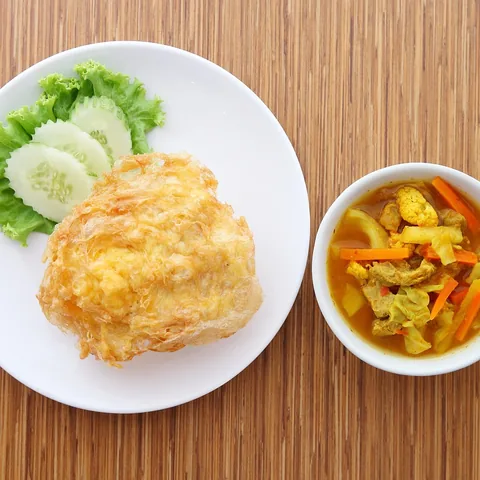
Kerak telor is a small, thick omelette of glutinous rice and duck or chicken egg, cooked in a pan over charcoal and flipped upside down to toast over the flames. It is sprinkled with toasted grated coconut, fried shallots and dried shrimp, and has a spicy, chewy-crisp bite. It is a classic of Betawi street food.
Diets
Allergens
Contains (in a typical recipe):
What it is made of
Recipe
Ingredients
- 100 g glutinous rice, soaked 4 hours
- 2 eggs
- 3 tbsp toasted grated coconut (kerisik)
- 1 tbsp dried shrimp, ground
- 2 tbsp fried shallots
- 1 cm ginger and 1 tsp ground pepper, salt
- 1 tsp galangal, grated
- 1 tbsp oil
Method
- Drain the rice.
- Beat the eggs with ginger, galangal, pepper and salt.
- Heat a pan with a little oil and spread the rice over it.
- Pour in the egg and cook on low heat until set.
- Flip the pan upside down over a flame to brown the top.
- Sprinkle with coconut, dried shrimp and fried shallots and serve.
How to make it lighter
- Use less oil and no deep-frying; the dish is already pan-cooked.
- Add chili sparingly for kids.
- Pair with cucumber slices for freshness.
History
It is a traditional dish of the Betawi people of Jakarta and is closely linked to the Jakarta Fair, where it is sold every year. Vendors still cook it on small charcoal stoves.
Count it in one photo
Point your camera at the table — Me Nutrition recognises Kerak telor (Jakarta spiced egg and rice omelette) and every other dish, with calories and macros for each. Ate only half? Slide it.
Download on the App StoreSimilar dishes
Values are estimates per 100 g for a typical recipe; home and restaurant versions vary. Diets and allergens are worked out from the ingredients of a typical recipe — always check with whoever cooked the dish. Not medical advice. Nutrition data: Me Nutrition dish database v15. How we count →