
King kong (giant manjar blanco cookie)
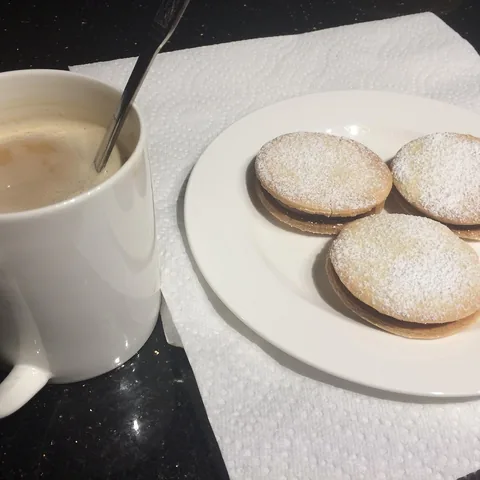
The king kong is the signature sweet of Lambayeque on Peru's northern coast. Large, thin, crumbly biscuits made with butter and yolks are stacked with fillings: manjar blanco milk caramel, a pineapple jam and often a peanut or coconut fudge. The finished block is big and heavy, and is sold whole in boxes or by the slice. It is extremely sweet and is shared rather than eaten alone.
Diets
Allergens
Contains (in a typical recipe):
What it is made of
Recipe
Ingredients
- 400 g flour
- 200 g butter, 4 egg yolks, 60 ml milk
- 400 g manjar blanco
- 250 g pineapple jam
- 200 g peanut fudge (manjar with ground peanuts)
Method
- Rub butter into the flour, add yolks and milk and knead briefly.
- Divide into 3–4 pieces and roll each into a thin rectangle.
- Prick and bake at 180 °C for 12–15 minutes until pale golden; cool.
- Layer the biscuits with manjar blanco, pineapple jam and peanut fudge.
- Press gently, rest for an hour and cut into slim slices.
How to make it lighter
- Serve very thin slices.
- Use only manjar and fruit layers for a lighter version.
- Pair a small piece with unsweetened tea or coffee.
History
The king kong is strongly associated with Lambayeque, especially the city of Chiclayo, where it is sold as a souvenir. Its name is commonly said to come from the King Kong film of the 1930s because of its large size.
Count it in one photo
Point your camera at the table — Me Nutrition recognises King kong (giant manjar blanco cookie) and every other dish, with calories and macros for each. Ate only half? Slide it.
Download on the App StoreSimilar dishes
Values are estimates per 100 g for a typical recipe; home and restaurant versions vary. Diets and allergens are worked out from the ingredients of a typical recipe — always check with whoever cooked the dish. Not medical advice. Nutrition data: Me Nutrition dish database v15. How we count →