
Humitas (Peruvian sweet corn cakes)
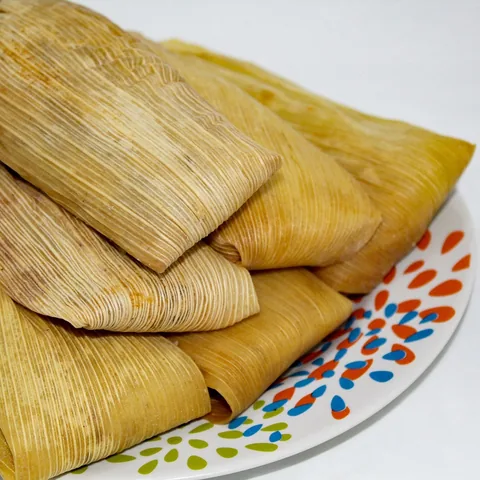
Peruvian humitas are made from fresh, starchy corn grated straight off the cob and mixed with butter, milk and sugar, sometimes with a hint of anise or a few raisins. The batter is folded into the green husks and steamed until set. The result is soft, moist and naturally sweet, tasting strongly of fresh corn. They are eaten warm at breakfast or as an afternoon snack with coffee.
Diets
Allergens
Contains (in a typical recipe):
What it is made of
Recipe
Ingredients
- 6 fresh corn cobs (about 900 g kernels)
- 80 g butter, melted
- 60 g sugar
- 100 ml milk
- ½ tsp anise seeds (optional)
- a pinch of salt
- fresh corn husks
Method
- Husk the corn carefully, keeping the best husks, and grate or blend the kernels.
- Mix the corn with butter, sugar, milk, anise and salt into a thick batter.
- Place two overlapping husks, add 2–3 spoonfuls of batter and fold into a parcel.
- Tie with a strip of husk.
- Steam upright for 45–50 minutes until firm; serve warm.
How to make it lighter
- Cut the sugar by half; fresh corn is already sweet.
- Use a little oil or less butter for a lighter batter.
- Pair with fruit or yoghurt rather than a sugary drink.
History
Humitas are made in many Andean countries, and Peru has both sweet and savoury versions, the savoury ones often with cheese and chile. They are especially common in the highlands during the corn harvest.
Count it in one photo
Point your camera at the table — Me Nutrition recognises Humitas (Peruvian sweet corn cakes) and every other dish, with calories and macros for each. Ate only half? Slide it.
Download on the App StoreSimilar dishes
Values are estimates per 100 g for a typical recipe; home and restaurant versions vary. Diets and allergens are worked out from the ingredients of a typical recipe — always check with whoever cooked the dish. Not medical advice. Nutrition data: Me Nutrition dish database v15. How we count →