
Sop konro (Makassar beef rib soup)
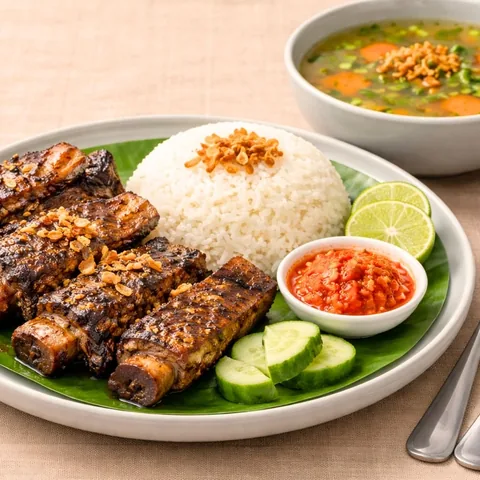
Sop konro is a dark, aromatic soup of beef ribs simmered until tender in a broth colored by black keluak nuts. The spices are coriander, galangal, lemongrass and nutmeg, giving a deep earthy flavor without much heat. The ribs are served in the bowl with a little broth and rice on the side, with lime and chili. A grilled version, konro bakar, is brushed with sweet soy and served with the soup.
Diets
Allergens
Contains (in a typical recipe):
What it is made of
Recipe
Ingredients
- 700 g beef ribs
- 1.8 l water
- 3 keluak nuts, mashed
- 4 shallots, 3 garlic cloves
- 2 cm galangal, 1 lemongrass, 2 tsp coriander
- salt, lime, celery leaf
Method
- Boil the ribs briefly and discard the water.
- Grind shallots, garlic, galangal, coriander and the keluak meat.
- Fry the paste in a little oil.
- Add the ribs, paste, lemongrass and water and simmer 2 hours.
- Season, skim fat and serve with lime and celery leaf.
How to make it lighter
- Chill and remove the fat from the broth.
- Use lean ribs or trim visible fat.
- Serve with vegetables rather than a large portion of rice.
History
Konro is a classic dish of Makassar in South Sulawesi, associated with the Bugis and Makassarese cooking tradition. The name refers to the ribs themselves.
Count it in one photo
Point your camera at the table — Me Nutrition recognises Sop konro (Makassar beef rib soup) and every other dish, with calories and macros for each. Ate only half? Slide it.
Download on the App StoreSimilar dishes

Values are estimates per 100 g for a typical recipe; home and restaurant versions vary. Diets and allergens are worked out from the ingredients of a typical recipe — always check with whoever cooked the dish. Not medical advice. Nutrition data: Me Nutrition dish database v15. How we count →