
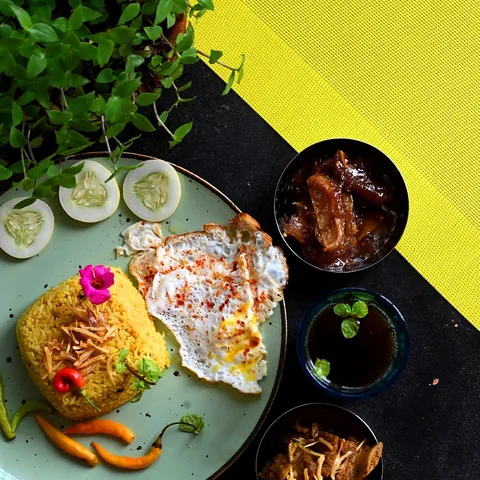
Poha (Maharashtrian flattened rice)
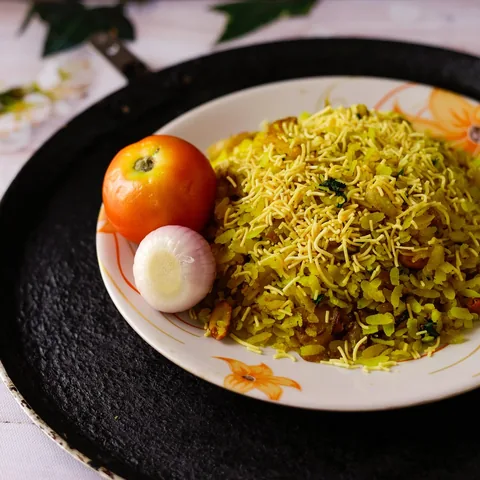
Poha is a light, quick breakfast found in nearly every home in Maharashtra. Flakes of beaten rice are softened with water and tossed with mustard seeds, onion, turmeric and peanuts. The result is fluffy, mildly spiced and lifted by lemon juice and fresh coriander.
Diets
Allergens
Contains (in a typical recipe):
What it is made of
Recipe
Ingredients
- 200 g thick flattened rice (poha)
- 1 tbsp oil
- 1 tsp mustard seeds
- 30 g raw peanuts
- 1 onion, chopped
- 1 small potato, diced small
- 10 curry leaves
- 1/2 tsp turmeric
- Juice of 1/2 lemon, salt, fresh coriander
Method
- Rinse the poha in a sieve until soft but not mushy, then drain and sprinkle with salt.
- Heat the oil and crackle the mustard seeds with the peanuts and curry leaves.
- Add the potato and onion and cook until the potato is tender.
- Stir in the turmeric, then gently fold in the poha.
- Cover and steam for 2-3 minutes on low heat.
- Finish with lemon juice and coriander and serve warm.
How to make it lighter
- Use red or brown poha for extra fibre.
- Add peas and carrot to turn it into a more filling meal.
- Use less oil and keep the peanuts for protein and crunch.
History
Poha is made from rice that is parboiled, flattened and dried, which makes it quick to cook and easy to store. It is a common morning dish across western and central India, with Maharashtra and Indore known for their versions. It is often served as a light snack when guests arrive.
Count it in one photo
Point your camera at the table — Me Nutrition recognises Poha (Maharashtrian flattened rice) and every other dish, with calories and macros for each. Ate only half? Slide it.
Download on the App StoreSimilar dishes
Values are estimates per 100 g for a typical recipe; home and restaurant versions vary. Diets and allergens are worked out from the ingredients of a typical recipe — always check with whoever cooked the dish. Not medical advice. Nutrition data: Me Nutrition dish database v15. How we count →