
Maki acevichado (ceviche-style sushi roll)
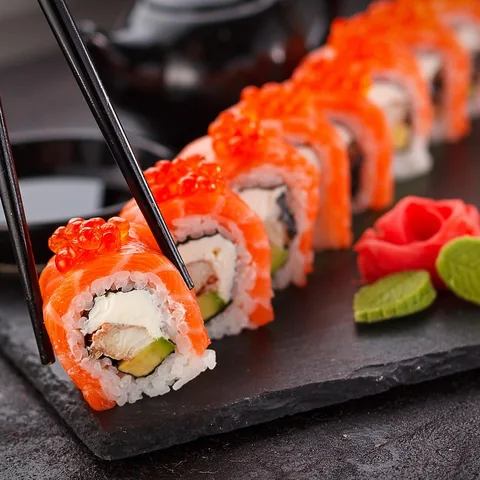
Maki acevichado is an inside-out roll filled with tempura or cooked shrimp and avocado, topped with thin slices of raw white fish or salmon. Over it goes the acevichada sauce, a mayonnaise blended with lime juice, ají amarillo and a little of the ceviche marinade known as leche de tigre. The result combines the creaminess of sushi bar rolls with the sharp, citrusy heat of ceviche.
Diets
Allergens
Contains (in a typical recipe):
What it is made of
Recipe
Ingredients
- 300 g sushi rice, cooked and seasoned
- 4 nori sheets
- 8 cooked or tempura shrimp
- 1 avocado
- 200 g sashimi-grade white fish or salmon
- 4 tbsp mayonnaise
- juice of 2 limes, 1 tsp ají amarillo paste
- 1 tsp soy sauce, sesame seeds
Method
- Mix mayonnaise, lime juice, ají amarillo and soy sauce for the acevichada sauce.
- Spread rice over a nori sheet, flip it so the rice faces down.
- Lay shrimp and avocado along the nori and roll tightly.
- Cover the roll with thin slices of fish.
- Cut into 8 pieces with a wet knife.
- Spoon the sauce on top and sprinkle with sesame.
How to make it lighter
- Use cooked shrimp instead of tempura to cut fat.
- Make the sauce with half yogurt, half mayonnaise.
- Eat with a cucumber salad and keep to one roll.
History
Nikkei cuisine grew from the Japanese community that settled in Peru from 1899 onward and mixed Japanese technique with Peruvian ingredients. The acevichado roll became a fixture of Lima sushi bars in the 2000s and is now one of the most ordered rolls in the country.
Count it in one photo
Point your camera at the table — Me Nutrition recognises Maki acevichado (ceviche-style sushi roll) and every other dish, with calories and macros for each. Ate only half? Slide it.
Download on the App StoreSimilar dishes

Values are estimates per 100 g for a typical recipe; home and restaurant versions vary. Diets and allergens are worked out from the ingredients of a typical recipe — always check with whoever cooked the dish. Not medical advice. Nutrition data: Me Nutrition dish database v15. How we count →