
Misal pav
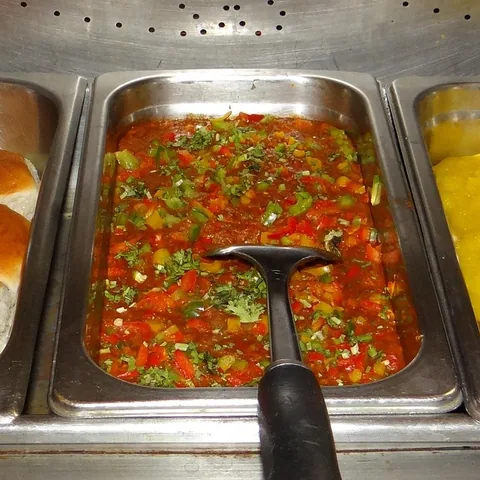
Misal pav is a beloved Maharashtrian breakfast and street snack. Sprouted beans are cooked in a spicy onion-tomato masala, then topped with crunchy farsan, chopped onion and lemon. A thin, fiery gravy called kat is poured over it, and soft pav rolls are served on the side for dipping.
Diets
Allergens
Contains (in a typical recipe):
What it is made of
Recipe
Ingredients
- 300 g sprouted moth beans (or mixed sprouts)
- 2 onions, finely chopped
- 2 tomatoes, chopped
- 2 tbsp oil
- 2 tbsp goda or garam masala
- 1 tsp turmeric and 1 tsp chilli powder
- 100 g farsan
- 8 pav rolls
- 1 lemon, cut in wedges
Method
- Heat the oil and fry half the onion until golden.
- Add tomatoes, turmeric, chilli and masala and cook into a thick paste.
- Stir in the sprouts and enough water to cover; simmer 20 minutes until tender.
- Thin some of the cooking liquid with extra masala and water to make the hot kat.
- Ladle the sprouts into bowls and top with farsan, raw onion and lemon.
- Pour over some kat and serve with warm pav.
How to make it lighter
- Use whole-wheat pav and less oil for a lighter plate.
- Sprouts are high in protein and fibre, so keep the portion of farsan small.
- Serve the kat separately so each person can control the heat.
History
Misal is closely associated with Pune, Mumbai and Kolhapur, each with its own level of heat. Pav bread came to India with the Portuguese and became a staple of western Indian street food. Many cities have famous misal houses that have served the dish for generations.
Count it in one photo
Point your camera at the table — Me Nutrition recognises Misal pav and every other dish, with calories and macros for each. Ate only half? Slide it.
Download on the App StoreSimilar dishes
Values are estimates per 100 g for a typical recipe; home and restaurant versions vary. Diets and allergens are worked out from the ingredients of a typical recipe — always check with whoever cooked the dish. Not medical advice. Nutrition data: Me Nutrition dish database v15. How we count →