
Ocopa arequipeña (potatoes in huacatay-peanut sauce)
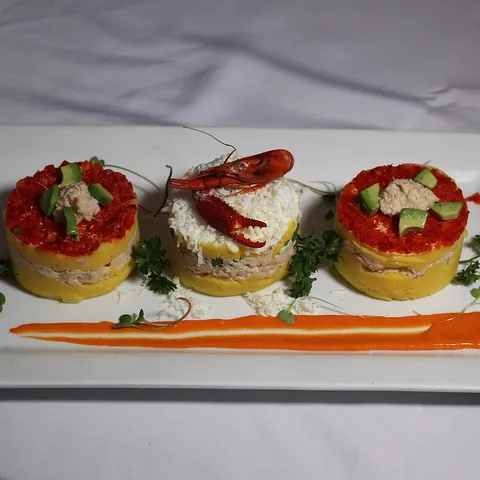
Ocopa is a cold starter of sliced boiled potatoes blanketed in a thick sauce. The sauce is made by toasting ají amarillo, onion and garlic, then blending them with huacatay (Peruvian black mint), roasted peanuts, fresh cheese, milk and a few crackers to thicken it. It tastes herbal, nutty and gently spicy, with a pale green colour. It is served with hard-boiled egg and black olives on lettuce.
Diets
Allergens
Contains (in a typical recipe):
What it is made of
Recipe
Ingredients
- 1 kg yellow potatoes
- 3 ají amarillo
- 1 onion (100 g)
- 2 garlic cloves
- 1 bunch huacatay (about 30 g leaves)
- 60 g roasted peanuts
- 150 g queso fresco
- 150 ml milk
- 4 crackers (30 g)
- 1 tbsp oil, eggs, olives, lettuce to serve
Method
- Boil the potatoes, peel and slice them.
- Toast the chiles, onion and garlic in a dry pan or with a little oil until charred.
- Blend them with huacatay, peanuts, cheese, milk and crackers until smooth and thick.
- Season with salt and adjust thickness with milk.
- Arrange potatoes on lettuce, coat with ocopa and garnish with egg and olives.
How to make it lighter
- Use light milk and less cheese for a leaner sauce.
- Serve the sauce with steamed vegetables as well as potatoes.
- Keep portions moderate; the peanuts make the sauce calorie-dense.
History
Ocopa is a signature dish of Arequipa in southern Peru, where huacatay is a key herb. It is a close relative of papa a la huancaína, which uses a similar cheese and chile base without the herb.
Count it in one photo
Point your camera at the table — Me Nutrition recognises Ocopa arequipeña (potatoes in huacatay-peanut sauce) and every other dish, with calories and macros for each. Ate only half? Slide it.
Download on the App StoreSimilar dishes
Values are estimates per 100 g for a typical recipe; home and restaurant versions vary. Diets and allergens are worked out from the ingredients of a typical recipe — always check with whoever cooked the dish. Not medical advice. Nutrition data: Me Nutrition dish database v15. How we count →