
Patasca (hominy and tripe soup)
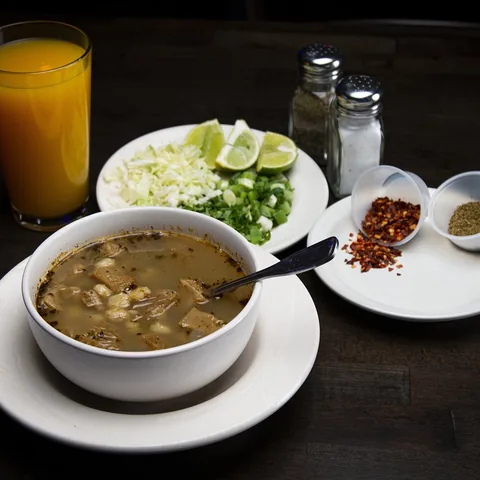
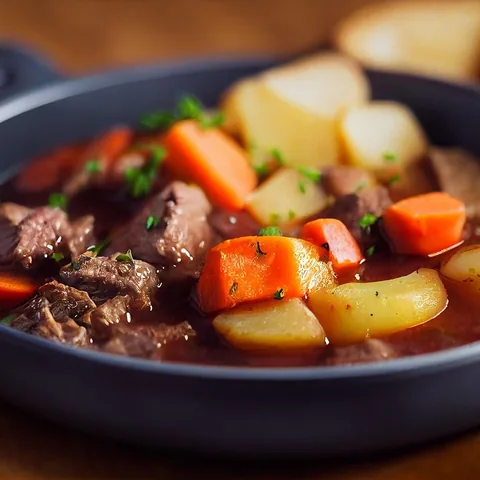
Patasca is a hearty soup built on large kernels of hominy that cook until they burst open, together with cleaned beef tripe and pieces of beef or lamb. The broth turns slightly thick from the corn starch and is finished with mint and a spoon of ají. It is eaten as a full meal, often on weekends or during festivals.
Diets
Allergens
None of the 14 major allergens in a typical recipe.
What it is made of
Recipe
Ingredients
- 500 g dried hominy, soaked overnight
- 500 g beef tripe, cleaned
- 400 g beef shank
- 1 onion
- 4 garlic cloves
- 1 tbsp ají panca paste
- 1 bunch mint
- 3 l water, salt
Method
- Boil the soaked hominy in unsalted water for about 2 hours until the kernels open.
- Simmer the tripe separately in salted water for 1.5 hours, then cut into strips.
- Brown the onion, garlic and ají panca in a little oil.
- Add the beef, the hominy with its liquid and the tripe.
- Simmer together for 40 minutes until the meat is tender.
- Season, add chopped mint and serve.
How to make it lighter
- Use more beef and less tripe for a leaner bowl, or the other way round to cut cost.
- Skim the surface regularly to remove fat.
- Pair with a green salad instead of bread, as the corn already provides plenty of starch.
History
Patasca is one of the old corn-based soups of the southern Andes, popular in Arequipa, Cusco and Puno, and a similar dish exists in Bolivia. In Arequipa it is part of the traditional rota of dishes served on different days of the week.
Count it in one photo
Point your camera at the table — Me Nutrition recognises Patasca (hominy and tripe soup) and every other dish, with calories and macros for each. Ate only half? Slide it.
Download on the App StoreSimilar dishes
Values are estimates per 100 g for a typical recipe; home and restaurant versions vary. Diets and allergens are worked out from the ingredients of a typical recipe — always check with whoever cooked the dish. Not medical advice. Nutrition data: Me Nutrition dish database v15. How we count →