
Shámbar (wheat and bean soup)
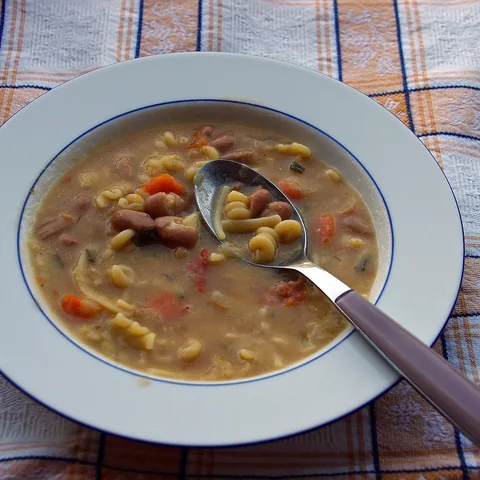
Shámbar is a thick soup of peeled wheat berries cooked with a mix of pulses such as beans, chickpeas, broad beans and peas, plus smoked ham, pork skin or other cured meats. A sofrito of onion, garlic and ají gives colour, and a handful of mint is stirred in at the end. It is served with toasted corn kernels (cancha) sprinkled on top for crunch.
Diets
Allergens
Contains (in a typical recipe):
What it is made of
Recipe
Ingredients
- 250 g peeled wheat berries, soaked overnight
- 100 g each dried beans, chickpeas and broad beans, soaked
- 100 g peas
- 200 g smoked ham or bacon, 200 g pork
- 1 onion, 4 garlic cloves
- 1 tbsp ají panca paste
- 1 bunch mint
- 3 l water, salt, toasted corn to serve
Method
- Cook the pulses and meats together in water for about 1.5 hours.
- Add the soaked wheat and cook 40 minutes more.
- Sauté onion, garlic and ají panca and add to the pot.
- Add the peas and simmer 15 minutes until thick.
- Stir in chopped mint and adjust salt.
- Serve with toasted corn on top.
How to make it lighter
- Use less cured meat and more pulses to reduce salt and fat.
- Skip the toasted corn or use only a pinch.
- A meat-free version with smoked paprika keeps the flavour and is vegan.
History
Shámbar is the traditional Monday dish of Trujillo and the La Libertad region, a custom still followed in many homes and restaurants. Its mix of grains and pulses reflects the farming of the northern Andean valleys that supply the city.
Count it in one photo
Point your camera at the table — Me Nutrition recognises Shámbar (wheat and bean soup) and every other dish, with calories and macros for each. Ate only half? Slide it.
Download on the App StoreSimilar dishes
Values are estimates per 100 g for a typical recipe; home and restaurant versions vary. Diets and allergens are worked out from the ingredients of a typical recipe — always check with whoever cooked the dish. Not medical advice. Nutrition data: Me Nutrition dish database v15. How we count →