
Pato no tucupi (duck in tucupi)
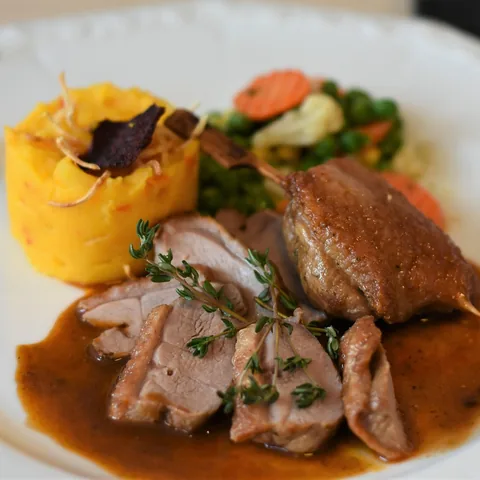
Pato no tucupi is duck that is first marinated and roasted, then cut up and simmered in tucupi, the sour yellow broth made from cassava juice. Blanched jambu leaves are added near the end and give a gentle tingling on the tongue. The meat is tender, the broth tangy and aromatic. It is eaten with white rice and cassava flour.
Diets
Allergens
None of the 14 major allergens in a typical recipe.
What it is made of
Recipe
Ingredients
- 1 duck (about 2.5 kg)
- 2 litres tucupi
- 3 bunches jambu
- 1 head garlic
- 1 onion
- 2 limes
- Culantro, basil, salt
Method
- Marinate the duck overnight with garlic, lime juice and salt.
- Roast at 200 °C for about 1 hour until browned.
- Meanwhile boil the tucupi with garlic, onion and herbs for 30 minutes.
- Cut the duck into pieces and put them in the tucupi.
- Simmer 40–60 minutes until the meat is very tender.
- Blanch the jambu separately and add it for the last 5 minutes.
- Serve with rice and cassava flour.
How to make it lighter
- Remove the skin before simmering to cut much of the fat.
- Skim the fat from the broth as it cooks.
- Serve more broth and jambu, less meat per plate.
History
The dish is a classic of Pará and is strongly associated with the Círio de Nazaré in Belém, when families gather for a large lunch. It pairs an Indigenous ingredient, tucupi, with duck cooked in a European style.
Count it in one photo
Point your camera at the table — Me Nutrition recognises Pato no tucupi (duck in tucupi) and every other dish, with calories and macros for each. Ate only half? Slide it.
Download on the App StoreSimilar dishes
Values are estimates per 100 g for a typical recipe; home and restaurant versions vary. Diets and allergens are worked out from the ingredients of a typical recipe — always check with whoever cooked the dish. Not medical advice. Nutrition data: Me Nutrition dish database v15. How we count →