
Chapana (Peruvian sweet cassava in banana leaf)
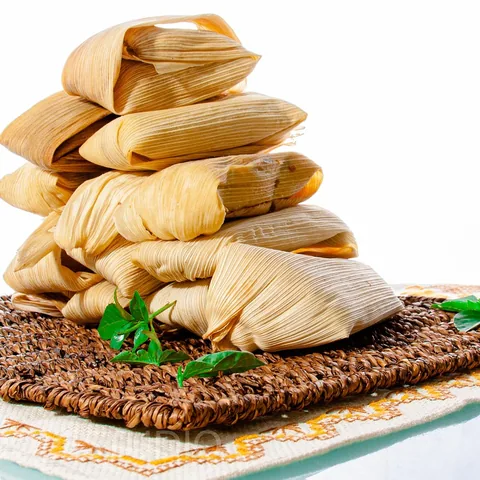
Chapana is a rustic sweet of finely grated cassava mixed with melted chancaca and a little anise. The dough is wrapped in banana leaves, tied and steamed or boiled until it sets into a dense, chewy, amber-coloured loaf. It is unwrapped and eaten in slices, warm or cold, with a deep caramel and leafy aroma.
Diets
Allergens
None of the 14 major allergens in a typical recipe.
What it is made of
Recipe
Ingredients
- 1 kg fresh cassava
- 300 g chancaca or dark panela
- 100 ml water
- 1 tsp anise seeds
- 1 pinch salt
- Banana leaves for wrapping
Method
- Peel the cassava, remove the woody core and grate it finely.
- Melt the chancaca in the water with the anise and let it cool slightly.
- Mix the syrup into the grated cassava with the salt to form a thick, sticky dough.
- Pass the banana leaves briefly over a flame to make them pliable.
- Spoon portions of dough onto the leaves, fold into rectangular parcels and tie with string.
- Steam or simmer the parcels for about 1 hour until the dough is firm and translucent.
- Let rest 15 minutes, then unwrap and slice.
How to make it lighter
- Use 200 g of chancaca instead of 300 g for a less sweet, more cassava-forward result.
- Pair a slice with fresh fruit or plain yogurt to balance the starch.
- Never eat cassava raw; make sure the parcels are fully cooked through.
History
Chapana is a traditional sweet of Afro-Peruvian communities in Cañete and Chincha on the southern coast. It uses cassava and cane sugar, staples of the region's former plantations, and is still made by local families and sold at fairs.
Count it in one photo
Point your camera at the table — Me Nutrition recognises Chapana (Peruvian sweet cassava in banana leaf) and every other dish, with calories and macros for each. Ate only half? Slide it.
Download on the App StoreSimilar dishes
Values are estimates per 100 g for a typical recipe; home and restaurant versions vary. Diets and allergens are worked out from the ingredients of a typical recipe — always check with whoever cooked the dish. Not medical advice. Nutrition data: Me Nutrition dish database v15. How we count →