
Dinuguan (Filipino pork blood stew)
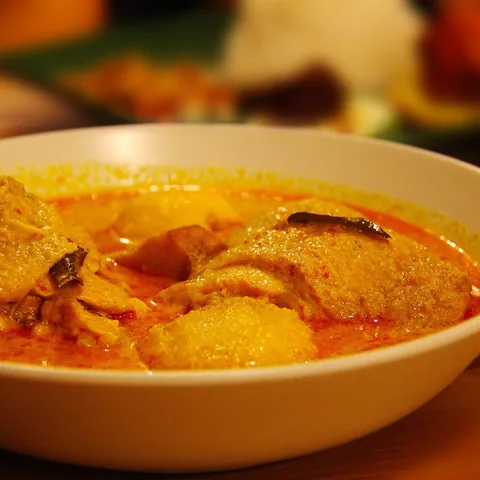
Dinuguan is a dark, glossy stew of pork meat and offal in a sauce made from pig's blood. Vinegar cuts the richness and gives a sharp tang, while long green chilies add heat. The flavor is earthy, savory and surprisingly clean. It is traditionally eaten with steamed rice cakes called puto.
Diets
Allergens
None of the 14 major allergens in a typical recipe.
What it is made of
Recipe
Ingredients
- 500 g pork shoulder and offal, cubed
- 250 ml fresh pig's blood
- 100 ml cane vinegar
- 6 garlic cloves, 1 onion
- 2 long green chilies
- salt and pepper
Method
- Simmer the pork and offal in water with garlic and onion for 40 minutes until tender.
- Add the vinegar and let it boil without stirring for 3 minutes.
- Slowly pour in the blood while stirring constantly.
- Add the chilies and simmer 15 minutes until thick and dark.
- Season and serve with rice or puto.
How to make it lighter
- Use mostly lean meat and fewer fatty offal pieces.
- Serve with plain rice and add a vegetable side.
- Enjoy in small portions; offal is high in cholesterol.
History
Blood stews exist in many cuisines, and dinuguan is the Filipino version, whose name derives from the word for blood. It is cooked across the country and often served at festive meals. Regional versions vary in sourness and spiciness.
Count it in one photo
Point your camera at the table — Me Nutrition recognises Dinuguan (Filipino pork blood stew) and every other dish, with calories and macros for each. Ate only half? Slide it.
Download on the App StoreSimilar dishes
Values are estimates per 100 g for a typical recipe; home and restaurant versions vary. Diets and allergens are worked out from the ingredients of a typical recipe — always check with whoever cooked the dish. Not medical advice. Nutrition data: Me Nutrition dish database v15. How we count →