
Longganisa (Filipino pork sausage)
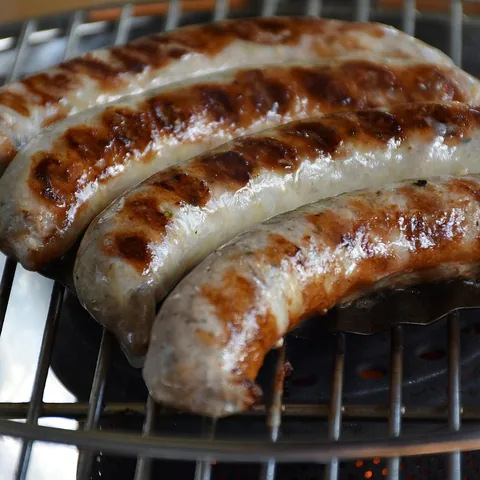
Longganisa is a small, plump pork sausage that comes in many regional styles. Some are sweet and reddish, others garlicky and sour with vinegar. Cooked in a pan with a little water, the casings burst and the fat fries them to a glossy brown. They are served with fried rice and egg at breakfast.
Diets
Allergens
None of the 14 major allergens in a typical recipe.
What it is made of
Recipe
Ingredients
- 400 g longganisa links
- 60 ml water
- 1 tbsp oil
- 4 garlic cloves for rice
- 300 g cooked rice
- 2 eggs
Method
- Place sausages and water in a cold pan.
- Simmer, covered, until the water evaporates.
- Add the oil and fry, turning, until browned.
- Fry rice with garlic.
- Fry the eggs and serve together.
How to make it lighter
- Buy leaner versions or use turkey or chicken longganisa.
- Pat off excess fat after frying.
- Pair with tomatoes and cucumber instead of extra rice.
History
The name comes from Spanish longaniza, which arrived with the colonizers. Filipino cooks adapted it with local vinegar, garlic and sugar, and nearly every province, such as Lucban, Vigan and Cebu, has its own version. It is now one of the best-known Filipino breakfast meats.
Count it in one photo
Point your camera at the table — Me Nutrition recognises Longganisa (Filipino pork sausage) and every other dish, with calories and macros for each. Ate only half? Slide it.
Download on the App StoreSimilar dishes
Values are estimates per 100 g for a typical recipe; home and restaurant versions vary. Diets and allergens are worked out from the ingredients of a typical recipe — always check with whoever cooked the dish. Not medical advice. Nutrition data: Me Nutrition dish database v15. How we count →