
Pulpo al olivo (octopus in olive sauce)
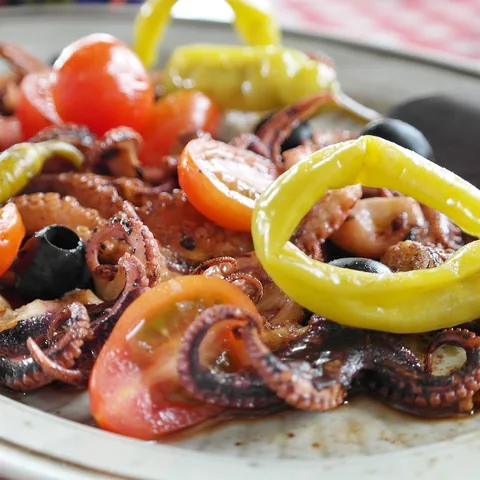
Pulpo al olivo is a cold starter of octopus cooked until tender, sliced paper-thin and arranged on a plate, then coated with a smooth mayonnaise blended with purple botija olives. The sauce is creamy, salty and slightly fruity, and is set off with a squeeze of lime, a drizzle of olive oil and a sprinkle of parsley. It is eaten with crackers or soda bread, or on its own as a first course.
Diets
Allergens
Contains (in a typical recipe):
What it is made of
Recipe
Ingredients
- 1 octopus (about 1.2 kg), cleaned
- 100 g botija or kalamata olives, pitted
- 150 ml mayonnaise (or 1 egg + 150 ml oil)
- juice of 1 lime
- 2 tbsp olive oil
- parsley, salt
- crackers to serve
Method
- Blanch the octopus three times in boiling water, then simmer 45–60 minutes until tender.
- Cool it in ice water and chill completely.
- Blend the olives with the mayonnaise and lime until smooth and purple.
- Slice the tentacles very thinly on the diagonal.
- Arrange the slices on a plate and cover with the olive sauce.
- Finish with olive oil, parsley and serve cold.
How to make it lighter
- Make the sauce with half Greek yogurt to cut fat.
- Use the sauce sparingly; the octopus itself is very lean.
- Serve with a salad rather than crackers.
History
The dish is credited to Rosita Yimura, a cook of Japanese descent in Lima, and is regarded as a classic of Nikkei cuisine. It uses botija olives from the southern coast around Tacna and Ica, combined with the Japanese care for thin-sliced seafood.
Count it in one photo
Point your camera at the table — Me Nutrition recognises Pulpo al olivo (octopus in olive sauce) and every other dish, with calories and macros for each. Ate only half? Slide it.
Download on the App StoreSimilar dishes
Values are estimates per 100 g for a typical recipe; home and restaurant versions vary. Diets and allergens are worked out from the ingredients of a typical recipe — always check with whoever cooked the dish. Not medical advice. Nutrition data: Me Nutrition dish database v15. How we count →