
Tacacá (tucupi and jambu soup)
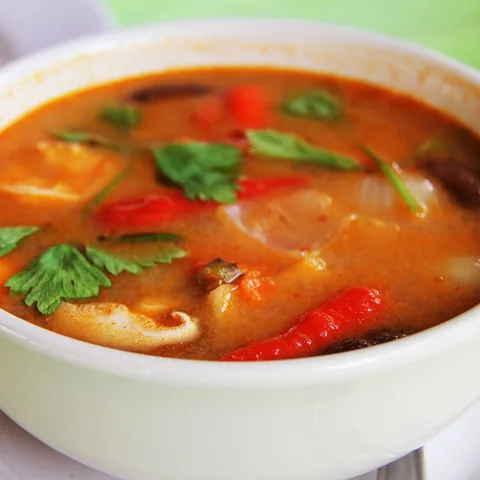
Tacacá is a hot soup from Pará served in a gourd bowl called a cuia. A ladle of translucent tapioca gum goes in first, then yellow, sour tucupi broth, cooked jambu leaves and a few dried shrimp. Jambu makes the lips and tongue tingle and go slightly numb, which is the point of the dish. It is sipped straight from the bowl, usually in the late afternoon from street vendors called tacacazeiras.
Diets
Allergens
Contains (in a typical recipe):
What it is made of
Recipe
Ingredients
- 1 litre tucupi
- 2 bunches jambu
- 100 g dried shrimp
- 80 g tapioca starch
- 4 garlic cloves
- 1 chicory or culantro leaf
- Hot pepper, salt
Method
- Boil the tucupi with garlic, culantro and salt for 20 minutes.
- Blanch the jambu leaves in salted water for 3–4 minutes and drain.
- Rinse the dried shrimp and soak briefly to reduce salt.
- Dissolve the starch in 400 ml cold water and cook, stirring, until it becomes a clear gum.
- Put 2 tablespoons of gum in each bowl.
- Pour over hot tucupi, then add jambu and shrimp.
- Season with pepper and serve very hot.
How to make it lighter
- Soak the shrimp well to cut sodium.
- Use less tapioca gum for an even lighter bowl.
- Only use commercially prepared tucupi, which has been properly cooked.
History
Tacacá comes from Indigenous Amazonian cooking, which developed tucupi as the juice pressed from wild cassava and cooked to make it safe. Today it is one of the most recognisable street foods of Belém and Manaus.
Count it in one photo
Point your camera at the table — Me Nutrition recognises Tacacá (tucupi and jambu soup) and every other dish, with calories and macros for each. Ate only half? Slide it.
Download on the App StoreSimilar dishes
Values are estimates per 100 g for a typical recipe; home and restaurant versions vary. Diets and allergens are worked out from the ingredients of a typical recipe — always check with whoever cooked the dish. Not medical advice. Nutrition data: Me Nutrition dish database v15. How we count →