
Tostones (twice-fried green plantain)
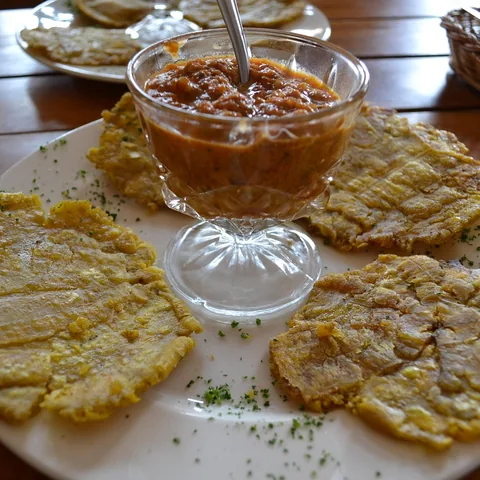
Tostones are chunks of unripe plantain fried once to soften, smashed flat, then fried again for a golden, crunchy finish. They taste savory and starchy rather than sweet, and are usually dipped in garlic sauce or mojo. They accompany meat and fish or are served as a snack.
Diets
Allergens
None of the 14 major allergens in a typical recipe.
What it is made of
Recipe
Ingredients
- 3 green plantains (about 600 g)
- 400 ml oil for frying
- 3 garlic cloves and 100 ml warm water for dipping
- 1 tsp salt
- Lime wedges
Method
- Peel the plantains and cut into 3 cm rounds.
- Fry in 160 C oil for 3-4 minutes until pale gold.
- Remove and smash each piece flat with a plate or press.
- Dip briefly in garlic salt water.
- Fry again at 180 C for 2 minutes until crisp.
- Drain, salt and serve hot with lime.
How to make it lighter
- Bake or air-fry the second stage to save oil.
- Blot well on paper after frying.
- Serve with a fresh salsa instead of creamy dips.
History
Fried plantains came to the Caribbean with African and Spanish cooks and have become a staple from Cuba to Puerto Rico and the Dominican Republic. In Cuba tostones are also called chatinos or tostones depending on the region. They are a standard side with roast pork and rice and beans.
Count it in one photo
Point your camera at the table — Me Nutrition recognises Tostones (twice-fried green plantain) and every other dish, with calories and macros for each. Ate only half? Slide it.
Download on the App StoreSimilar dishes
Values are estimates per 100 g for a typical recipe; home and restaurant versions vary. Diets and allergens are worked out from the ingredients of a typical recipe — always check with whoever cooked the dish. Not medical advice. Nutrition data: Me Nutrition dish database v15. How we count →