
Trucha frita (fried trout)
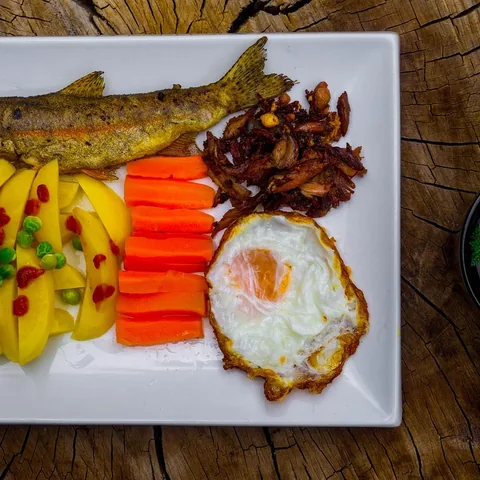
Trucha frita is a whole trout, rubbed with garlic and salt, dusted with flour and fried until the skin is crackling and the flesh stays moist. Around Lake Titicaca and in highland valleys it comes with boiled potatoes, rice, a little salad and lime wedges, and sometimes a spoon of salsa criolla. The taste is clean and mild, which makes it a favourite with children and visitors.
Diets
Allergens
Contains (in a typical recipe):
What it is made of
Recipe
Ingredients
- 2 trout, cleaned (about 300 g each)
- 3 garlic cloves, crushed
- 50 g flour
- 4 tbsp oil
- 300 g potatoes, boiled
- 2 cups cooked rice
- 2 limes
- salt, pepper
Method
- Rinse and dry the trout; make two shallow cuts on each side.
- Rub inside and out with garlic, salt and pepper.
- Dust lightly with flour and shake off the excess.
- Fry in hot oil 4–5 minutes per side until golden.
- Drain on paper.
- Serve with potatoes, rice and lime wedges.
How to make it lighter
- Grill or bake the trout to cut the fat by more than half.
- Choose either rice or potatoes rather than both.
- Add a big onion-tomato salad for freshness and fiber.
History
Trout is not native to Peru; it was introduced to Andean rivers and lakes in the twentieth century and is now farmed widely, especially in Puno. Fried trout has since become one of the most common restaurant dishes along Lake Titicaca.
Count it in one photo
Point your camera at the table — Me Nutrition recognises Trucha frita (fried trout) and every other dish, with calories and macros for each. Ate only half? Slide it.
Download on the App StoreSimilar dishes
Values are estimates per 100 g for a typical recipe; home and restaurant versions vary. Diets and allergens are worked out from the ingredients of a typical recipe — always check with whoever cooked the dish. Not medical advice. Nutrition data: Me Nutrition dish database v15. How we count →