
Bukhara plov with raisins
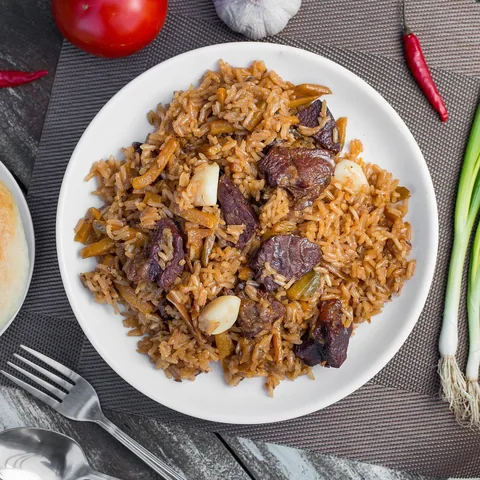
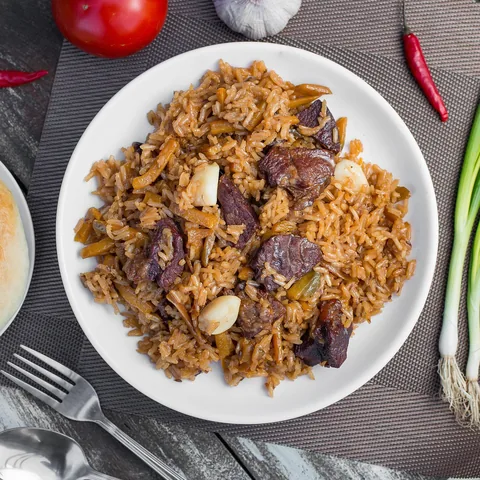
Bukhara plov is a gentler, slightly sweet take on the Uzbek pilaf. Lamb, carrots and chickpeas form the base, and a generous handful of raisins is steamed with the rice so they turn plump and juicy. The flavour is mellow, with cumin and fruit balancing the rich meat. It is usually shared from one big platter with salad and tea.
Diets
Allergens
None of the 14 major allergens in a typical recipe.
What it is made of
Recipe
Ingredients
- 500 g medium-grain rice
- 500 g lamb
- 400 g carrots
- 100 g raisins
- 120 g soaked chickpeas
- 2 onions
- 100 ml oil
- 1 tsp cumin, salt
Method
- Soak the rice and chickpeas separately; rinse the raisins.
- Brown the lamb in oil, then add onions and cook until golden.
- Add carrots, chickpeas, cumin, salt and water; simmer 40 minutes.
- Scatter the raisins over, add the rice and water to 1.5 cm above, and cook until absorbed.
- Cover and steam 25 minutes on low, then serve on a platter.
How to make it lighter
- Cut the raisins to 50 g to reduce sugar.
- Use lean lamb and 60 ml oil.
- Add more chickpeas for extra protein and fibre.
History
Bukhara was a major stop on the Silk Road, and its cooking often pairs meat with dried fruit. Raisins are a hallmark of the city's plov and of many festive rice dishes in the region.
Count it in one photo
Point your camera at the table — Me Nutrition recognises Bukhara plov with raisins and every other dish, with calories and macros for each. Ate only half? Slide it.
Download on the App StoreSimilar dishes
Values are estimates per 100 g for a typical recipe; home and restaurant versions vary. Diets and allergens are worked out from the ingredients of a typical recipe — always check with whoever cooked the dish. Not medical advice. Nutrition data: Me Nutrition dish database v15. How we count →