
Tashkent plov
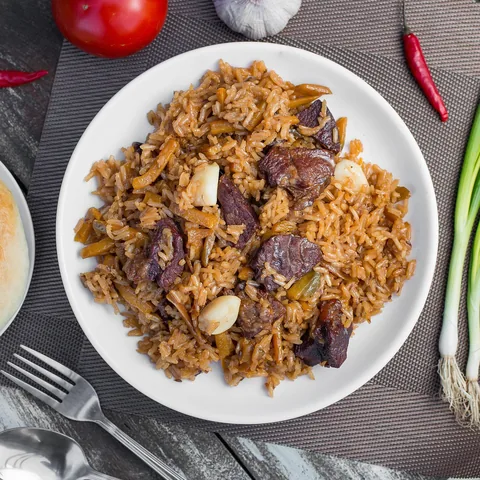
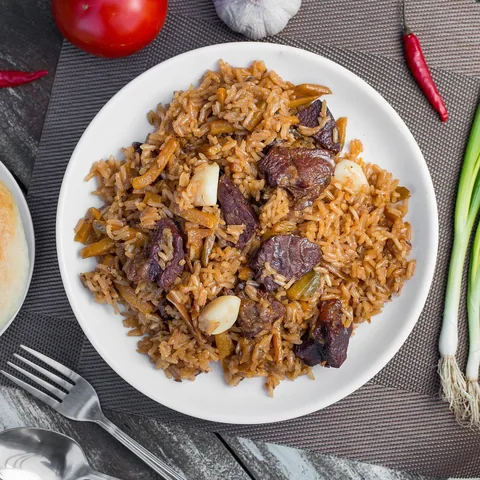
Tashkent plov is the city version of Uzbekistan's national pilaf. Rice is steamed over a rich base of lamb, onions, yellow carrots and chickpeas fried in a kazan, then served heaped on a platter. Halved quail eggs and slices of lamb go on top. It is eaten with a tomato-onion salad and green tea.
Diets
Allergens
Contains (in a typical recipe):
What it is made of
Recipe
Ingredients
- 500 g devzira or medium-grain rice
- 600 g lamb shoulder
- 500 g yellow and orange carrots
- 150 g soaked chickpeas
- 2 onions
- 8 quail eggs
- 120 ml oil
- 1 tsp cumin, salt
Method
- Soak rice for an hour; boil chickpeas until half-cooked.
- Heat oil in a heavy pot and brown the lamb pieces, then add sliced onions.
- Add carrots cut into matchsticks and fry until soft, then add chickpeas, cumin, salt and water to cover; simmer 40 minutes (this is the zirvak).
- Spread drained rice on top, add water 1.5 cm above it and cook on high until absorbed.
- Pile the rice into a dome, make holes, cover and steam on low for 25 minutes.
- Boil and halve the quail eggs; mix the plov and serve with eggs and sliced lamb on top.
How to make it lighter
- Use lean leg of lamb and halve the oil.
- Serve a smaller rice portion with a large tomato and cucumber salad.
- Swap half the rice for extra chickpeas and carrots for more fibre.
History
Plov is the centrepiece of Uzbek hospitality and is cooked by men at weddings, holidays and neighbourhood gatherings. Each city has its own style, and the Tashkent version is known for its garnish of quail eggs and sliced meat.
Count it in one photo
Point your camera at the table — Me Nutrition recognises Tashkent plov and every other dish, with calories and macros for each. Ate only half? Slide it.
Download on the App StoreSimilar dishes
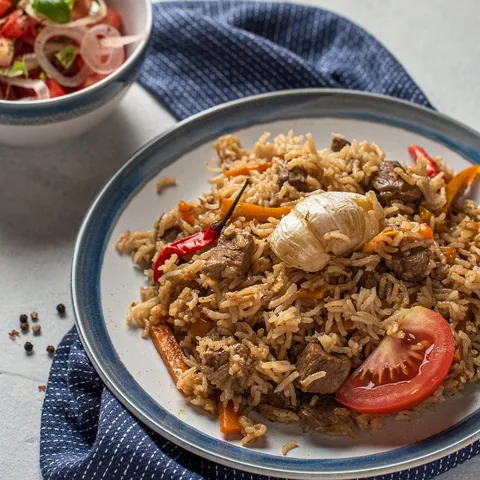
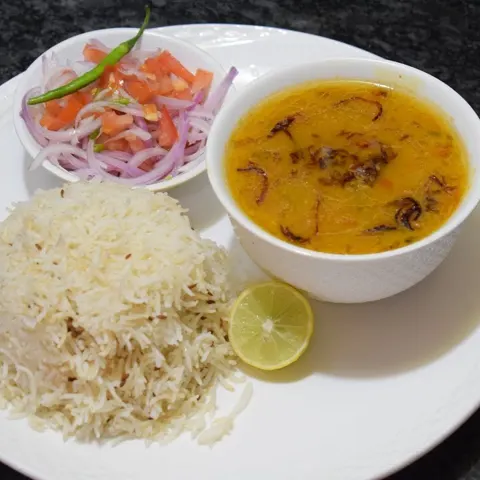
Values are estimates per 100 g for a typical recipe; home and restaurant versions vary. Diets and allergens are worked out from the ingredients of a typical recipe — always check with whoever cooked the dish. Not medical advice. Nutrition data: Me Nutrition dish database v15. How we count →