
Moshkichiri
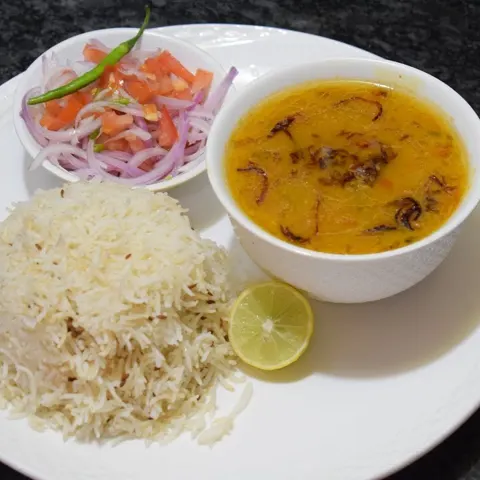
Moshkichiri is a thick, spoonable porridge of mung beans and rice. Diced beef or lamb, onion and carrot are fried first, then mung beans and rice are cooked in the same pot until they break down into a creamy mass. It is mild, earthy and very satisfying. It is often served with yogurt, fresh herbs or a crunchy salad on the side.
Diets
Allergens
None of the 14 major allergens in a typical recipe.
What it is made of
Recipe
Ingredients
- 200 g mung beans
- 150 g rice
- 300 g beef
- 1 onion
- 1 carrot
- 40 ml oil
- 1.5 l water
- Salt, cumin, black pepper
Method
- Rinse the mung beans and boil them 20 minutes until they start to split.
- Fry diced beef in oil, then add onion and carrot and cook 10 minutes.
- Add the mung beans with their water and the washed rice.
- Simmer on low, stirring often, for 30 minutes until thick and creamy.
- Season with salt, cumin and pepper; serve with herbs or yogurt.
How to make it lighter
- Make it meatless and add extra carrot and pumpkin.
- Use lean beef and halve the oil.
- Increase mung beans and reduce rice for more protein and fibre.
History
Mung beans, called mosh in Uzbek, are a traditional pulse in Central Asian cooking. Moshkichiri is a typical everyday home dish, especially in colder months.
Count it in one photo
Point your camera at the table — Me Nutrition recognises Moshkichiri and every other dish, with calories and macros for each. Ate only half? Slide it.
Download on the App StoreSimilar dishes
Values are estimates per 100 g for a typical recipe; home and restaurant versions vary. Diets and allergens are worked out from the ingredients of a typical recipe — always check with whoever cooked the dish. Not medical advice. Nutrition data: Me Nutrition dish database v15. How we count →