
Uzbek holva (flour and nut halva)
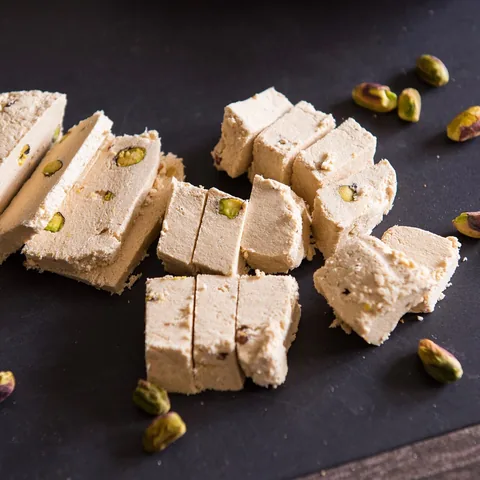
Uzbek holva comes in many forms, but a classic home version is made by slowly toasting flour in butter or oil until it smells nutty, then stirring in hot sugar syrup and chopped walnuts. It sets into a firm, crumbly-chewy sweet that is cut into pieces. Holva is served in small amounts with green tea, often on holidays or at memorial gatherings.
Diets
Allergens
Contains (in a typical recipe):
What it is made of
Recipe
Ingredients
- 200 g flour
- 100 g butter
- 50 ml oil
- 250 g sugar
- 150 ml water
- 100 g chopped walnuts
Method
- Boil sugar and water into a syrup for 5 minutes.
- Melt butter with oil and toast the flour on low heat, stirring, until golden.
- Pour in the hot syrup carefully while stirring fast.
- Add the walnuts and cook until the mass leaves the pan sides.
- Press into a tray, cool and cut into small pieces.
How to make it lighter
- Serve a single small piece with unsweetened tea.
- Reduce the sugar by a quarter; the nuts add flavour.
- Use mostly oil instead of butter for less saturated fat.
History
Halva-type sweets have been made across Central Asia for centuries, and Uzbek bazaars sell many varieties, from flour-based to sesame and nut versions. Cities such as Bukhara and Kokand are known for their confectionery traditions.
Count it in one photo
Point your camera at the table — Me Nutrition recognises Uzbek holva (flour and nut halva) and every other dish, with calories and macros for each. Ate only half? Slide it.
Download on the App StoreSimilar dishes

Values are estimates per 100 g for a typical recipe; home and restaurant versions vary. Diets and allergens are worked out from the ingredients of a typical recipe — always check with whoever cooked the dish. Not medical advice. Nutrition data: Me Nutrition dish database v15. How we count →