
Nisholda (Uzbek whipped egg-white cream)
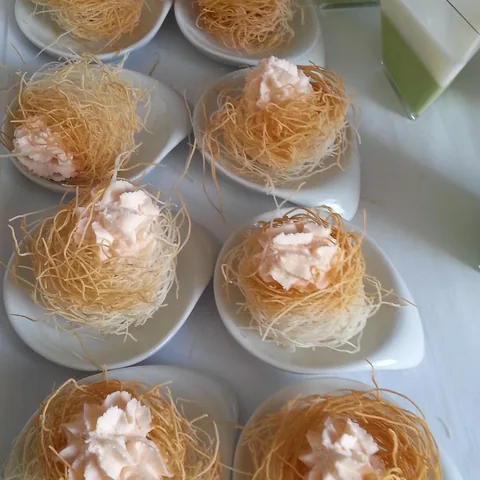
Nisholda is a thick, snow-white cream made by beating egg whites with a hot sugar syrup and an infusion of licorice root, which makes it extra foamy and adds a faint herbal note. It is airy, sticky and very sweet, similar to a dense marshmallow fluff. It is spread on bread or eaten with a spoon alongside green tea.
Diets
Allergens
Contains (in a typical recipe):
What it is made of
Recipe
Ingredients
- 4 egg whites
- 400 g sugar
- 150 ml water
- 20 g dried licorice root
- 1 tsp lemon juice
Method
- Simmer licorice root in 150 ml water for 20 minutes and strain.
- Dissolve the sugar in the licorice water and boil to a thick syrup (about 118 °C).
- Whip the egg whites with lemon juice to stiff peaks.
- Pour the hot syrup in a thin stream while whipping continuously.
- Keep whipping until thick and glossy; serve cooled with bread or tea.
How to make it lighter
- Serve in a small bowl with plain tea; it is very sugary.
- Spread thinly on wholegrain bread.
- People with high blood pressure should limit licorice.
History
Nisholda is especially popular during the month of Ramadan, when it is sold at bazaars as an evening treat to break the fast. It is a traditional sweet in Uzbekistan and neighbouring Tajikistan.
Count it in one photo
Point your camera at the table — Me Nutrition recognises Nisholda (Uzbek whipped egg-white cream) and every other dish, with calories and macros for each. Ate only half? Slide it.
Download on the App StoreSimilar dishes

Values are estimates per 100 g for a typical recipe; home and restaurant versions vary. Diets and allergens are worked out from the ingredients of a typical recipe — always check with whoever cooked the dish. Not medical advice. Nutrition data: Me Nutrition dish database v15. How we count →