
Kazan kebab (Qozon kabob)
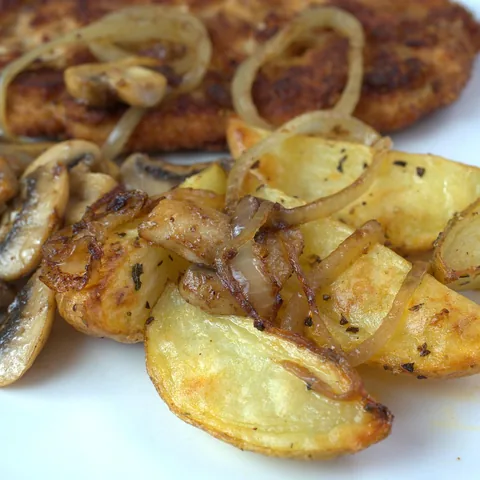
Qozon kabob is meat and potatoes cooked the Uzbek way, in a heavy cast-iron kazan. Lamb ribs are seared in their own fat until crisp, then covered and left to steam until tender, while potato chunks fry in the same pot. The dish is finished with raw onion rings, cumin and fresh herbs. It is a favourite at roadside eateries and family weekends.
Diets
Allergens
None of the 14 major allergens in a typical recipe.
What it is made of
Recipe
Ingredients
- 1 kg lamb ribs
- 800 g potatoes
- 2 onions
- 60 ml oil
- 4 cloves garlic
- 1 tsp cumin, salt, black pepper
- Fresh dill and cilantro
Method
- Cut the ribs into single bones and season with salt, pepper and cumin.
- Heat oil in a kazan and fry the ribs on high until browned on all sides.
- Add a splash of water and garlic, cover and cook on low 40 minutes until tender.
- Remove the lid, add potato wedges and fry, turning, until golden and crisp.
- Serve topped with thin onion rings and chopped herbs.
How to make it lighter
- Choose meaty ribs and pour off rendered fat before frying the potatoes.
- Bake the potatoes separately in the oven with little oil.
- Serve with a large raw vegetable salad.
History
The name simply means kebab from the kazan, the round-bottomed pot used across Central Asia. It is a common dish in Uzbek chaikhanas, the traditional teahouses.
Count it in one photo
Point your camera at the table — Me Nutrition recognises Kazan kebab (Qozon kabob) and every other dish, with calories and macros for each. Ate only half? Slide it.
Download on the App StoreSimilar dishes
Values are estimates per 100 g for a typical recipe; home and restaurant versions vary. Diets and allergens are worked out from the ingredients of a typical recipe — always check with whoever cooked the dish. Not medical advice. Nutrition data: Me Nutrition dish database v15. How we count →