
Khasip (Uzbek lamb and rice sausage)
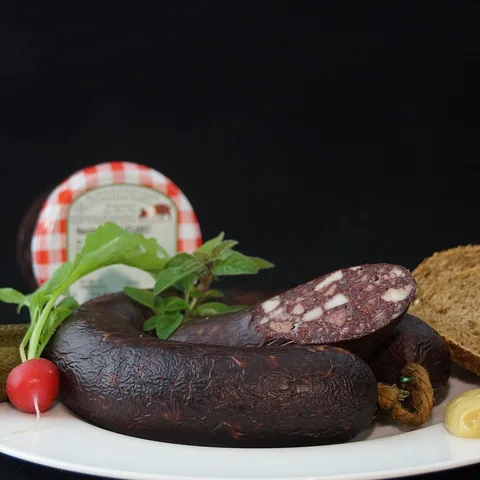
Khasip is a home-made sausage in which finely chopped lamb lungs, liver and meat are mixed with rice, onion, tail fat and cumin, then stuffed into cleaned intestine. The sausages are boiled until the rice is soft and cut into thick rounds. It tastes earthy, rich and well spiced and is often served with fresh onion and bread.
Diets
Allergens
None of the 14 major allergens in a typical recipe.
What it is made of
Recipe
Ingredients
- 600 g lamb offal (lung, liver, heart)
- 150 g lamb tail fat
- 150 g rice
- 2 onions
- 1 tsp cumin
- 2 m cleaned casing
- salt, black pepper
Method
- Wash and soak the casings well.
- Finely chop the offal, fat and onion.
- Mix with raw rice, cumin, salt and pepper.
- Stuff the casings loosely, tie the ends and prick a few times.
- Simmer in salted water for about 1 hour, then slice and serve.
How to make it lighter
- Use less tail fat and more lean meat.
- Eat a modest portion with a big fresh salad.
- Offal is rich in iron but also in cholesterol; keep it occasional.
History
Khasip is a way of using the whole animal after slaughter, a practice common in Uzbek and other Central Asian cuisines. It is often sold at bazaars and is popular in autumn and winter.
Count it in one photo
Point your camera at the table — Me Nutrition recognises Khasip (Uzbek lamb and rice sausage) and every other dish, with calories and macros for each. Ate only half? Slide it.
Download on the App StoreSimilar dishes
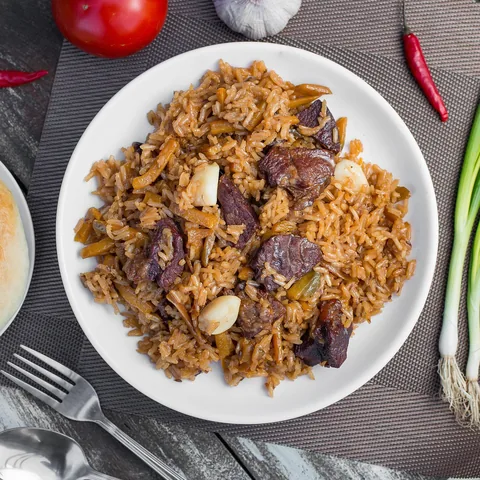
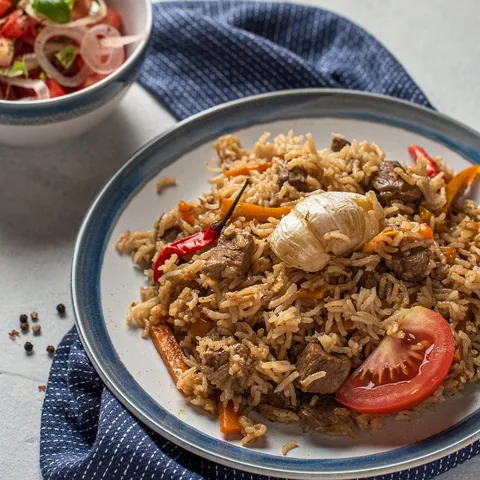
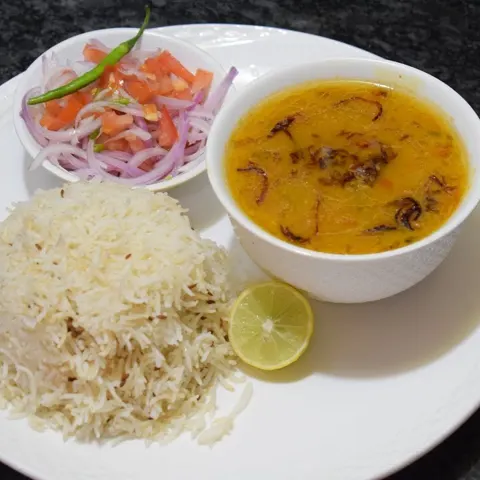
Values are estimates per 100 g for a typical recipe; home and restaurant versions vary. Diets and allergens are worked out from the ingredients of a typical recipe — always check with whoever cooked the dish. Not medical advice. Nutrition data: Me Nutrition dish database v15. How we count →