
Motal pendir (sheepskin-aged cheese)
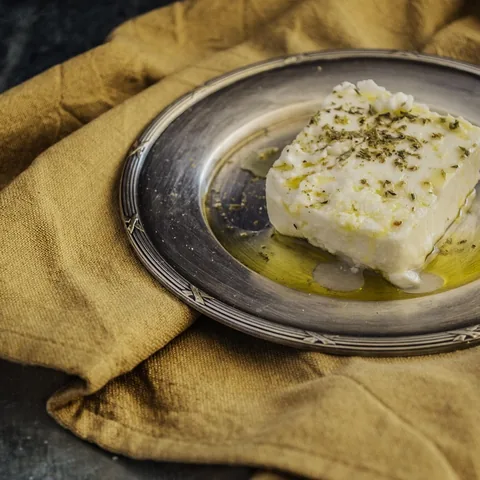
Motal is a white sheep's milk cheese that is crumbled, salted and packed tightly into a cleaned sheep or goat skin to mature for several months. The result is dry, crumbly and strongly flavoured, salty and sharp with a farmhouse aroma. It is eaten for breakfast with fresh herbs, lavash and tea, or added to salads and pastries.
Diets
Allergens
Contains (in a typical recipe):
What it is made of
Recipe
Ingredients
- 5 l fresh sheep's milk
- rennet as directed on the package
- 120 g coarse salt
- a cleaned, salted sheepskin or a cheesecloth-lined container
Method
- Warm the milk to about 32 °C, add rennet and leave until a firm curd forms.
- Cut the curd, drain it in cloth and press until firm.
- Crumble the cheese and mix with salt.
- Pack tightly into the skin or container, pressing out air.
- Seal and age in a cool place for 2-3 months.
How to make it lighter
- It is very salty: soak slices briefly in water or eat small portions.
- Pair with plenty of fresh herbs, cucumber and tomato.
- Use it grated as a flavourful topping so a little goes a long way.
History
Motal is a herders' cheese made in the mountain areas of Azerbaijan and neighbouring regions, where the skin served as a portable, airtight container. It is still produced in villages and sold at markets across the country.
Count it in one photo
Point your camera at the table — Me Nutrition recognises Motal pendir (sheepskin-aged cheese) and every other dish, with calories and macros for each. Ate only half? Slide it.
Download on the App StoreSimilar dishes
Values are estimates per 100 g for a typical recipe; home and restaurant versions vary. Diets and allergens are worked out from the ingredients of a typical recipe — always check with whoever cooked the dish. Not medical advice. Nutrition data: Me Nutrition dish database v15. How we count →