
Badrijani nigvzit (eggplant rolls with walnuts)
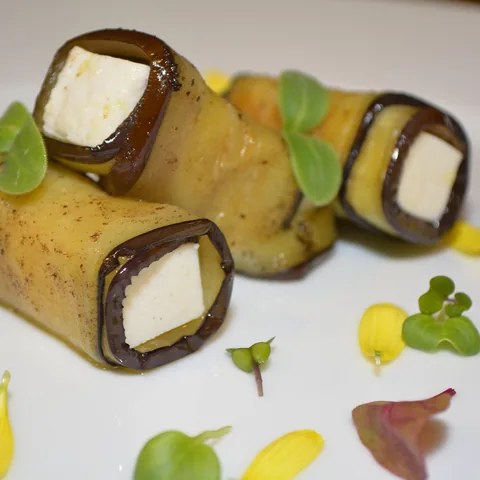
Badrijani nigvzit are thin lengthwise slices of eggplant, fried until soft and golden, then spread with a paste of walnuts, garlic, coriander, khmeli suneli and a little vinegar. Each slice is rolled or folded and scattered with pomegranate seeds. They are served cold as one of the most popular appetizers at Georgian feasts.
Diets
Allergens
Contains (in a typical recipe):
What it is made of
Recipe
Ingredients
- 3 long eggplants (about 900 g)
- 150 g walnuts
- 3 garlic cloves
- 30 g coriander
- 1 tsp khmeli suneli, 1/2 tsp ground fenugreek
- 1 tbsp wine vinegar
- 80 ml sunflower oil, 50 g pomegranate seeds, salt
Method
- Slice the eggplants lengthwise 5 mm thick, salt and leave 20 minutes, then pat dry.
- Fry the slices in oil on both sides until soft and golden; drain on paper.
- Grind the walnuts with garlic, coriander, spices, vinegar, salt and a little water into a spreadable paste.
- Spread a spoon of paste on each slice.
- Roll up or fold in half and arrange on a plate.
- Sprinkle with pomegranate seeds and chill before serving.
How to make it lighter
- Brush the slices with oil and bake or grill instead of frying.
- Thin the walnut paste with water so less is needed.
- Count two or three rolls as a portion alongside salad.
History
Eggplant with walnut paste is a staple of the Georgian supra and is found in restaurants throughout the country. Its combination of fried vegetable, walnut and pomegranate showcases classic Georgian flavour pairings.
Count it in one photo
Point your camera at the table — Me Nutrition recognises Badrijani nigvzit (eggplant rolls with walnuts) and every other dish, with calories and macros for each. Ate only half? Slide it.
Download on the App StoreSimilar dishes
Values are estimates per 100 g for a typical recipe; home and restaurant versions vary. Diets and allergens are worked out from the ingredients of a typical recipe — always check with whoever cooked the dish. Not medical advice. Nutrition data: Me Nutrition dish database v15. How we count →