
Sarapatel (Brazilian pork offal stew)
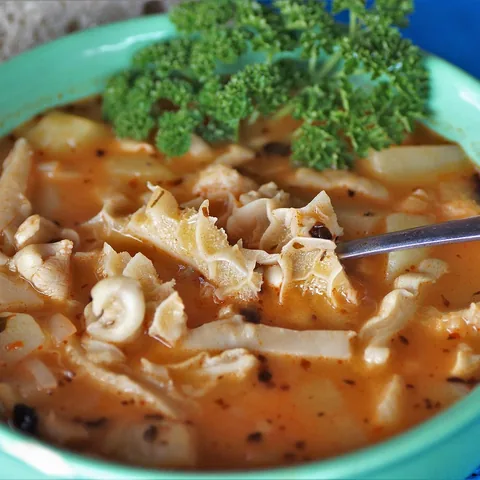
Sarapatel is a robust stew from the Brazilian Northeast made with pork liver, heart, lungs and other offal. The meat is cleaned with lime, diced small and slowly stewed with onion, tomato, garlic, cumin, bay and chilli, then thickened with cooked blood. The result is dark, strongly flavoured and peppery. It is eaten with rice, cassava flour or farofa, often at weekend gatherings.
Diets
Allergens
None of the 14 major allergens in a typical recipe.
What it is made of
Recipe
Ingredients
- 1.5 kg mixed pork offal (liver, heart, lungs, tripe)
- 200 ml cooked pork blood, crumbled
- 2 onions and 3 tomatoes, chopped
- 6 garlic cloves, 2 bay leaves
- 1 tsp cumin, chilli peppers to taste
- juice of 3 limes, parsley, spring onion, salt
Method
- Wash the offal thoroughly with lime juice and water, then blanch it for 5 minutes.
- Dice everything into small cubes and season with garlic, cumin, bay and salt.
- Brown the onion, add the offal and tomato and cook for a few minutes.
- Add water to cover and stew gently for 1.5–2 hours until tender.
- Stir in the blood and chilli, cook 15 minutes more and finish with herbs.
How to make it lighter
- Offal is rich in iron and B12; a small portion goes a long way.
- Skim off the fat that rises during stewing.
- Serve with greens and less farofa to lighten the plate.
History
Sarapatel arrived with the Portuguese, who also took it to Goa, and in Brazil it became a staple of the Northeast. Using every part of the animal made it a practical dish for rural families.
Count it in one photo
Point your camera at the table — Me Nutrition recognises Sarapatel (Brazilian pork offal stew) and every other dish, with calories and macros for each. Ate only half? Slide it.
Download on the App StoreSimilar dishes
Values are estimates per 100 g for a typical recipe; home and restaurant versions vary. Diets and allergens are worked out from the ingredients of a typical recipe — always check with whoever cooked the dish. Not medical advice. Nutrition data: Me Nutrition dish database v15. How we count →