
Dakjuk (Korean chicken rice porridge)
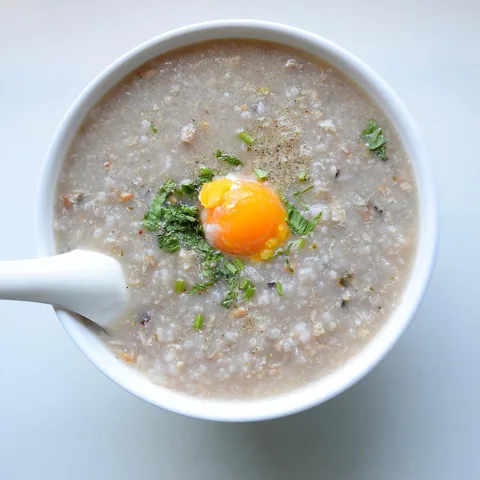
Dakjuk is a thick, silky porridge made by cooking rice slowly in chicken broth until the grains collapse. It tastes mild and savory, with shreds of tender chicken and tiny pieces of carrot. It is eaten hot with a spoon, seasoned at the table with a little soy sauce and sesame oil.
Diets
Allergens
Contains (in a typical recipe):
What it is made of
Recipe
Ingredients
- 1 cup rice (180 g)
- 300 g chicken thigh or breast
- 1 small carrot (60 g)
- 4 garlic cloves (15 g)
- 1.2 l water
- 1 tbsp sesame oil (15 ml)
- salt, soy sauce
Method
- Soak the rice for 30 minutes and drain.
- Simmer the chicken with garlic in the water for 25 minutes, then shred the meat and keep the broth.
- Toast the rice briefly in sesame oil in a pot.
- Add the broth and stir often for 25 minutes over low heat until thick.
- Stir in the chicken and carrot, cook 5 minutes, season with salt and serve.
How to make it lighter
- Use skinless chicken breast to cut the fat.
- Add spinach or zucchini for more vegetables.
- Season at the table so each person controls the salt.
History
Juk, rice porridge, is a very old part of Korean home cooking and is traditionally served to people who are ill or recovering. Chicken porridge is among the most common versions made in family kitchens.
Count it in one photo
Point your camera at the table — Me Nutrition recognises Dakjuk (Korean chicken rice porridge) and every other dish, with calories and macros for each. Ate only half? Slide it.
Download on the App StoreSimilar dishes
Values are estimates per 100 g for a typical recipe; home and restaurant versions vary. Diets and allergens are worked out from the ingredients of a typical recipe — always check with whoever cooked the dish. Not medical advice. Nutrition data: Me Nutrition dish database v15. How we count →